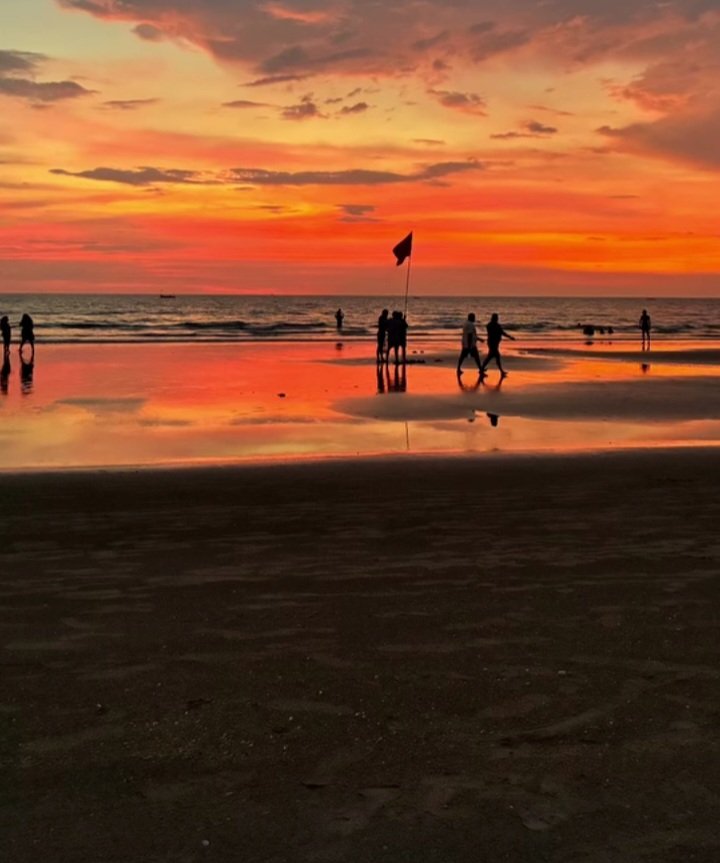
The idea of Goa usually brings images of crowded beaches, loud music from beachfront cafés, tourists walking with sun hats, and long lines outside popular restaurants. But this is the picture of peak season. There is another Goa—quieter, slower, deeply refreshing, and surprisingly beautiful—that appears only during the off-season. Most travellers ignore it, but the ones who choose these months often say they finally saw the real Goa. Off-season in Goa broadly covers two distinct parts of the year, the scorching summer months of April and May and the dramatic monsoon months from June to September. Together, they create a travel experience that is different from any regular holiday. To understand why people still travel during this time, it is important to look at how the weather behaves, how tourism changes, how prices drop, and how nature takes over every corner of the state.
The summer off-season begins around the first week of April when Goa starts heating up. Temperatures shoot past 35 degrees, and humidity rises quickly because the sea breeze becomes warmer. For many travellers, this climate feels too hot to walk around in the afternoon, and that is one major reason why this period is called the off-season. But mornings and evenings are surprisingly pleasant, and this is when Goa transforms into a quiet beach paradise. The usual crowds disappear, the roads remain mostly empty, and the beaches feel like private stretches of sand. Hotels know that demand is low, so they offer huge discounts—sometimes up to 60 percent. Even popular properties such as beach-front resorts, boutique hotels, and villas in North Goa lower their rates drastically. For travellers who enjoy privacy and peaceful surroundings, this is one of the best times to explore Goa without worrying about long queues or high prices.
As summer continues, the landscape starts changing. Trees look dry, the sky stays bright throughout the day, and the sea becomes calmer, offering a different shade of blue as sunlight hits the water. While this might not be the ideal season for water sports in the afternoon due to the heat, mornings are perfect for long walks, cycling, photography, or simply relaxing under a beach umbrella with a cold beverage. Many restaurants and cafés remain operational during these months, especially in tourist-heavy areas such as Calangute, Candolim, Baga, Vagator, and Morjim in the north and Colva, Benaulim, Cavelossim, and Palolem in the south. The service feels more personal, as staff have more time to engage with guests. Even taxi drivers, local guides, and shopkeepers are more relaxed and friendly because the usual rush of visitors is missing. This natural slowdown gives Goa a unique charm during summer, making it suitable for travellers looking for a slow-paced holiday or those who want to enjoy Goa’s nightlife without the hassle of overcrowding.
But the entire character of Goa changes dramatically when June arrives. The monsoon off-season begins with dark clouds rolling in from the Arabian Sea and the sound of thunder echoing over the coastline. Rain starts gently but soon becomes frequent and heavy, turning the entire state into a lush, green paradise. This is the Goa that many locals love the most—a Goa of waterfalls, mud roads, forests that smell fresh, paddy fields glistening under rainfall, and beaches that look wild and untouched. Tourists reduce drastically because most water sports shut down, the sea becomes rough, and many beach shacks close for safety reasons. However, homestays, hotels, luxury resorts, and inland cafés remain open and offer monsoon-specific discounts. The off-season monsoon period is ideal for travellers who want to sit by their balcony and watch the rain, explore nature trails, visit waterfalls like Dudhsagar or Arvalem, or take long drives through Chorla Ghat or the internal village roads surrounded by forests.
The monsoon months also bring a different rhythm to Goa’s culture. Traditional festivals such as Sao Joao, Bonderam, and Patolleanchem Fest take place during this period, offering visitors a chance to experience Goan life beyond beaches. Locals celebrate these festivals with music, dance, colourful costumes, traditional food, and a strong sense of community. Tourists who visit Goa during monsoon often find themselves joining local celebrations, experiencing heritage homes, trying regional dishes like seafood curry rice, patoleo, kappa, and sorpotel, or exploring museums and churches without facing peak-season chaos. The rains make everything feel calmer, from the lanes of Fontainhas to the old Portuguese mansions in Chandor. Even Panaji appears more peaceful as the drizzle washes over the colorful houses and narrow streets. In short, monsoon off-season gives visitors a chance to see a softer, more authentic side of Goa.
One significant advantage of travelling during off-season, whether summer or monsoon, is the affordability. Air tickets drop in price, hotel rates fall dramatically, and even premium experiences become budget-friendly. Visitors can enjoy larger rooms, free upgrades, and better service simply because hotels are trying to maintain occupancy. Food prices remain the same, but there is no waiting time at popular restaurants. Even taxis negotiate more because there are fewer passengers on the streets. Activities like spice plantation tours, river cruises, ATV rides, island tours, and wildlife sanctuaries remain functional during off-season months, giving travellers plenty to do despite closures of water sports. Some beaches such as Miramar, Ashwem, Mandrem, Betalbatim, Agonda, and Betul also look more beautiful in the rain, offering mesmerizing views for photography lovers.
Safety is an important aspect during off-season, especially in monsoon. The sea becomes unpredictable with high tides and strong currents, which is why lifeguards put red flags on many beaches. Swimming is not allowed at most places, and tourists must listen to local warnings. However, the rain does not stop travellers from enjoying beach walks, sunrise views, or romantic moments under the gentle drizzle. Inland travel remains safe, and roads from Goa to nearby destinations like Karwar, Gokarna, Belagavi, and Sawantwadi become lush and scenic. Visitors need to pack light raincoats, quick-dry clothes, comfortable footwear, and waterproof bags for electronics. In summer, travellers should carry sunscreen, caps, and stay hydrated due to the heat. Once basic safety measures are taken, the off-season becomes one of the most rewarding times to explore Goa without stress.
Many travellers worry about what remains open during the off-season. Contrary to popular belief, Goa does not shut down completely. While beach shacks close temporarily during monsoon, restaurants, cafés, casinos, nightclubs, shopping malls, supermarkets, ferry services, museums, churches, temples, and spice farms continue to operate normally. Popular nightlife spots such as Tito’s Lane, Club Cabana, Hammerzz, and many coastal pubs remain open throughout the year. Local markets like Mapusa Market and Margao Market stay lively even in heavy rain. Tourists can explore indoor attractions like the Big Daddy Casino, museum of Christian art, Wax World, and many heritage houses. In summer, most beach shacks still operate until mid-May, and water sports continue until the monsoon officially begins. Therefore, off-season visitors never feel bored or restricted because Goa continues to offer a wide range of experiences.
An important reason why the off-season feels so magical is the sheer calm it brings. Goa’s usual peak-season energy is replaced by a slow rhythm that encourages relaxation. This is the time when travellers sit at a café for hours, read books near the beach, take long drives through empty roads, or simply soak in the silence of nature. Digital detox, romantic holidays, solo trips, and wellness vacations become more meaningful during these months because there are no distractions from large crowds. Yoga retreats, meditation centers, Ayurveda spas, and eco-resorts offer special monsoon packages for travellers looking to unwind. The smell of wet earth, the sound of waves hitting the rocks, and the sight of rain-soaked palm trees create an atmosphere that feels healing and deeply refreshing.
The off-season also unlocks a different kind of adventure for those willing to explore. Monsoon trekking to places like Tambdi Surla, Netravali, Kuskem, and various jungle trails becomes a memorable experience. River kayaking, though season-dependent, can be arranged in safe stretches. Birdwatching becomes more rewarding because many species become active during rain. Photography enthusiasts get dramatic skies, vibrant landscapes, and rare wildlife sightings. The waterfalls come alive fully, especially Dudhsagar, which becomes a roaring stream surrounded by thick forests. Travellers who enjoy raw natural beauty often prefer monsoon visits over peak season, even if some outdoor activities become restricted. Summer, on the other hand, is ideal for quiet beach explorations, night markets, sunset cruises, and peaceful stargazing sessions on calm nights.
One often overlooked advantage of off-season is the warmth and hospitality of locals. With no rush, people have more time for conversations. Taxi drivers give useful suggestions, café owners recommend hidden spots, and locals share stories about festivals, traditions, and history. Visitors feel more connected with the place because interactions are more personal. Many homestays invite travellers to try local food or experience the Goan lifestyle. In villages like Aldona, Siolim, Parra, and Moira, the monsoon transforms the surroundings into green dreamlike landscapes with lakes, fields, and little bridges. Tourists who stay in these areas often say they experienced the most peaceful side of Goa during off-season.
For travellers planning a romantic getaway, the off-season is one of the best times to visit. Monsoon rains create a cosy atmosphere, and many resorts offer private balconies, jacuzzis, and in-house dining options ideal for couples. Candlelight dinners become more intimate, with the sound of rainfall in the background. Walks along rain-washed beaches or drives through mist-covered ghats add to the charm. Summer evenings are equally romantic with breezy, open skies and peaceful coastal views. Honeymooners often prefer off-season because they get more privacy and better room categories within their budget.
From a budget perspective, off-season is a blessing. Luxury hotels that usually charge high prices during December and January become almost half the cost. Villas, which are normally booked months in advance, become easily available. Flight prices remain low except around long weekends. Bike rentals, taxis, and tour guides offer better deals. For backpackers, hostels become quieter and more comfortable. Even food costs reduce indirectly as travellers avoid peak-season markups charged by some vendors. Shopping becomes more enjoyable because shopkeepers have time to show different products patiently.
Despite all these benefits, off-season travel is not for everyone. Some people prefer buzzing nightlife, full-fledged beach shacks, busy flea markets, and constant activity. They might find the slow pace boring. Those who dislike humidity or heavy rains might also struggle during these months. But travellers who appreciate nature, quiet surroundings, cultural experiences, and relaxed holidays discover that off-season Goa gives them more meaningful memories than the peak season ever could. It all depends on personal travel style.
The magic of off-season in Goa lies in its simplicity. There is no pressure to rush between attractions, no need to plan everything in advance, and no constant noise of crowded beaches. It is a time when travellers rediscover the joy of slow travel, where they value experiences instead of checklists. Whether it is sipping chai during a rain shower, exploring a village lane on a scooter, watching fishermen mend their nets, or observing how the landscape shifts from sunlit days to stormy evenings, every part of the off-season feels authentic and grounded.
The off-season months of summer and monsoon together reveal a side of Goa that is peaceful, affordable, beautiful, and culturally rich. It may not be the Goa of party crowds and bright sunlight, but it is a Goa of calm mornings, gentle rains, dramatic skies, and warm local hospitality. Travellers looking for budget-friendly stays, intimate experiences, and natural beauty often fall in love with off-season Goa. It is a time when the state slows down, nature takes control, and visitors get to see the region’s true character. Once a traveller experiences off-season, they often return again—not for the beaches alone, but for the feeling of quiet freedom that Goa offers only in these special months.