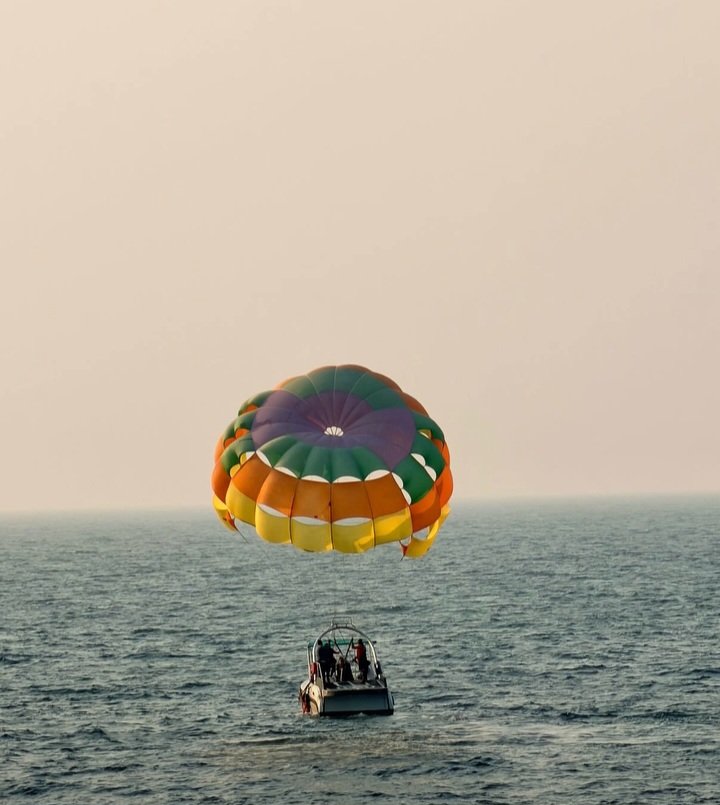
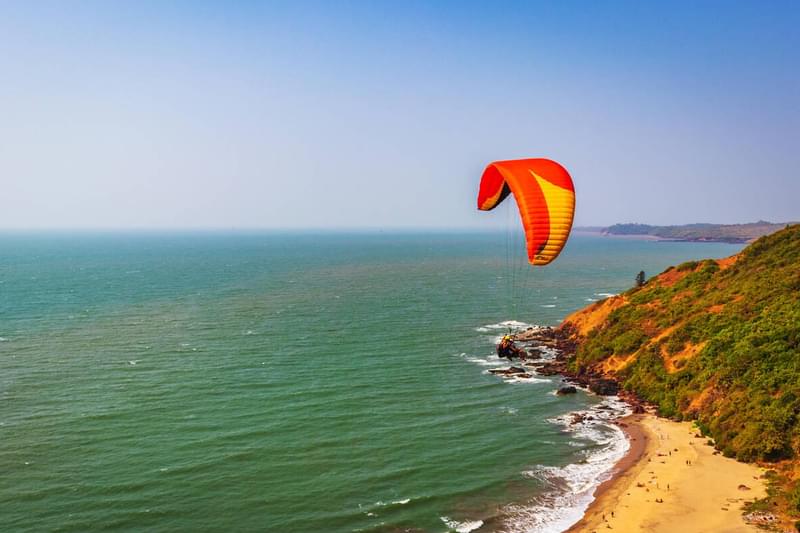
Paragliding in Goa is not just an adventure activity; it is an experience that quietly blends thrill with the coastal soul of the state. When people think of Goa, images of beaches, nightlife, seafood, and relaxed afternoons usually come to mind. But above these beaches, when the wind flows gently from the Arabian Sea and the sun paints the sky in soft colours, paragliding opens a completely different way of seeing Goa. From the air, the coastline looks endless, the sea feels calmer, and the usual crowd noise disappears into silence. This is why paragliding in Goa has slowly become a favourite for travellers who want something memorable, not rushed, not artificial, and deeply connected with nature.
Unlike many adventure destinations where paragliding feels extreme and intimidating, Goa offers a more welcoming and beginner-friendly atmosphere. The terrain is forgiving, the wind conditions are mostly stable during the season, and trained pilots operate with a calm, professional approach. Even first-time flyers often describe the experience as peaceful rather than scary. The moment your feet leave the ground, the nervousness fades and is replaced by a sense of freedom that is difficult to explain in words. Below you, the waves keep moving as they always have, beach shacks look tiny, and the horizon feels closer than ever.
Most paragliding activities in Goa happen along the northern coastline, where cliffs, open beaches, and wind directions are suitable for smooth take-offs and landings. One of the most well-known locations is Arambol Beach, where paragliding has almost become part of the local adventure culture. Arambol’s slightly elevated terrain and wide open beach make it ideal for short take-off runs and soft landings. The area attracts both tourists and experienced pilots who enjoy flying during the late afternoon hours. As the sun starts to dip, the sky often turns golden, making the flight visually stunning without feeling rushed or commercial.
Another popular spot is Anjuna Beach, especially in areas closer to the rocky edges rather than the crowded central beach. Here, paragliding feels more dramatic, as the contrast between cliffs, sea, and open sky is sharper. Flights from Anjuna often offer a slightly higher altitude depending on wind conditions, giving flyers a longer time in the air. The view of the coastline stretching toward Vagator and beyond creates a feeling of floating between land and sea rather than simply flying above a beach.
What makes paragliding in Goa special is the rhythm of the experience. There is no hurry. Operators usually wait patiently for the right wind instead of forcing a flight. You might sit for a while, watching the waves, listening to instructions, and slowly getting comfortable with the idea of flying. This relaxed approach reflects Goa’s larger lifestyle, where things happen at their own pace. When the pilot finally signals that it’s time, everything feels natural, almost effortless.
The actual flight is usually done as a tandem experience, meaning you fly with a certified pilot who controls the paraglider. This allows people with no prior training to enjoy the activity safely. Before take-off, the pilot explains basic instructions in simple language: how to run for a few steps, how to sit once airborne, and how to relax your body. There is no complex technical talk, which helps reduce anxiety. Once in the air, communication continues calmly, and many pilots even point out landmarks, beaches, or fishing boats below.
From above, Goa reveals details that are invisible from the ground. You can see the natural curves of the shoreline, patches of greenery hidden behind beach roads, and small boats moving slowly across the water. The soundscape also changes completely. Instead of traffic or music, you hear mostly wind and occasional instructions from the pilot. This quietness is one of the most unexpected and rewarding parts of paragliding in Goa.
The duration of a paragliding flight in Goa usually ranges from five to fifteen minutes, depending on wind conditions and location. While this may sound short, the experience feels longer because of the intensity of being airborne. Many flyers say that even a few minutes in the sky leave a lasting impression. It is not about duration but about perspective. Seeing Goa from above changes the way you remember the place.
Season plays a crucial role in paragliding here. The best time for paragliding in Goa is generally between October and April, when the monsoon has ended and wind patterns are more predictable. During these months, the weather is clearer, humidity is manageable, and visibility is excellent. Monsoon season, from June to September, is usually avoided for paragliding due to strong, unpredictable winds and heavy rainfall. Responsible operators stop flights during this period to ensure safety.
Safety is a topic that often worries first-time flyers, but in Goa, licensed operators follow standard procedures strictly. Equipment is checked regularly, harnesses are secured properly, and flights are cancelled if conditions are not suitable. Helmets are usually provided, and pilots are trained to handle sudden changes in wind. This focus on safety is one of the reasons why paragliding in Goa has maintained a good reputation over the years.
Pricing for paragliding in Goa varies based on location, duration, and season. Typically, costs range from moderate to slightly premium during peak tourist months. While some people try to find the cheapest option, experienced travellers often recommend choosing operators based on reviews and professionalism rather than price alone. A well-organised flight with a calm pilot adds far more value than saving a small amount of money.
Paragliding also attracts photographers and content creators who want a different visual story of Goa. Many operators offer GoPro footage or allow you to carry small cameras, securely attached. Aerial shots of beaches, waves, and sunsets create content that feels authentic rather than staged. However, even without a camera, the memory of flying stays vivid because it engages all your senses at once.
What makes paragliding in Goa truly human and relatable is the emotional reaction people have after landing. There is often laughter, relief, and a quiet sense of achievement. Many people who never considered themselves adventurous end up describing it as one of the highlights of their trip. It is not about conquering fear but about trusting the moment and allowing yourself to float.
For locals, paragliding has also created new livelihood opportunities. Trained pilots, ground assistants, transport providers, and nearby cafés benefit from the activity. In places like Arambol, adventure tourism blends naturally with the existing culture rather than replacing it. You might finish a flight and then sit at a beach shack, sipping tea, watching someone else take off into the sky. The experience flows into everyday life instead of standing apart from it.
Paragliding in Goa is also suitable for a wide age range, as long as basic health conditions are met. Operators usually have weight and age guidelines, but these are reasonable and focused on safety. Families, couples, and solo travellers all find something meaningful in the experience. For couples, flying together one after another often becomes a shared memory tied to the place itself.
Unlike adrenaline-heavy activities that rely on speed or height alone, paragliding offers a balanced mix of excitement and calm. It allows you to engage with Goa beyond beaches and parties, showing you a quieter, more expansive side of the destination. When you float above the coastline, you realise that Goa is not just a place you visit but a landscape you feel connected to.
In the end, paragliding in Goa is not about ticking an adventure box on a travel checklist. It is about seeing a familiar destination from an unfamiliar angle. It is about trusting the wind, listening to the sea from above, and allowing yourself to pause in mid-air. For many travellers, that pause becomes the most meaningful moment of their entire Goa journey.