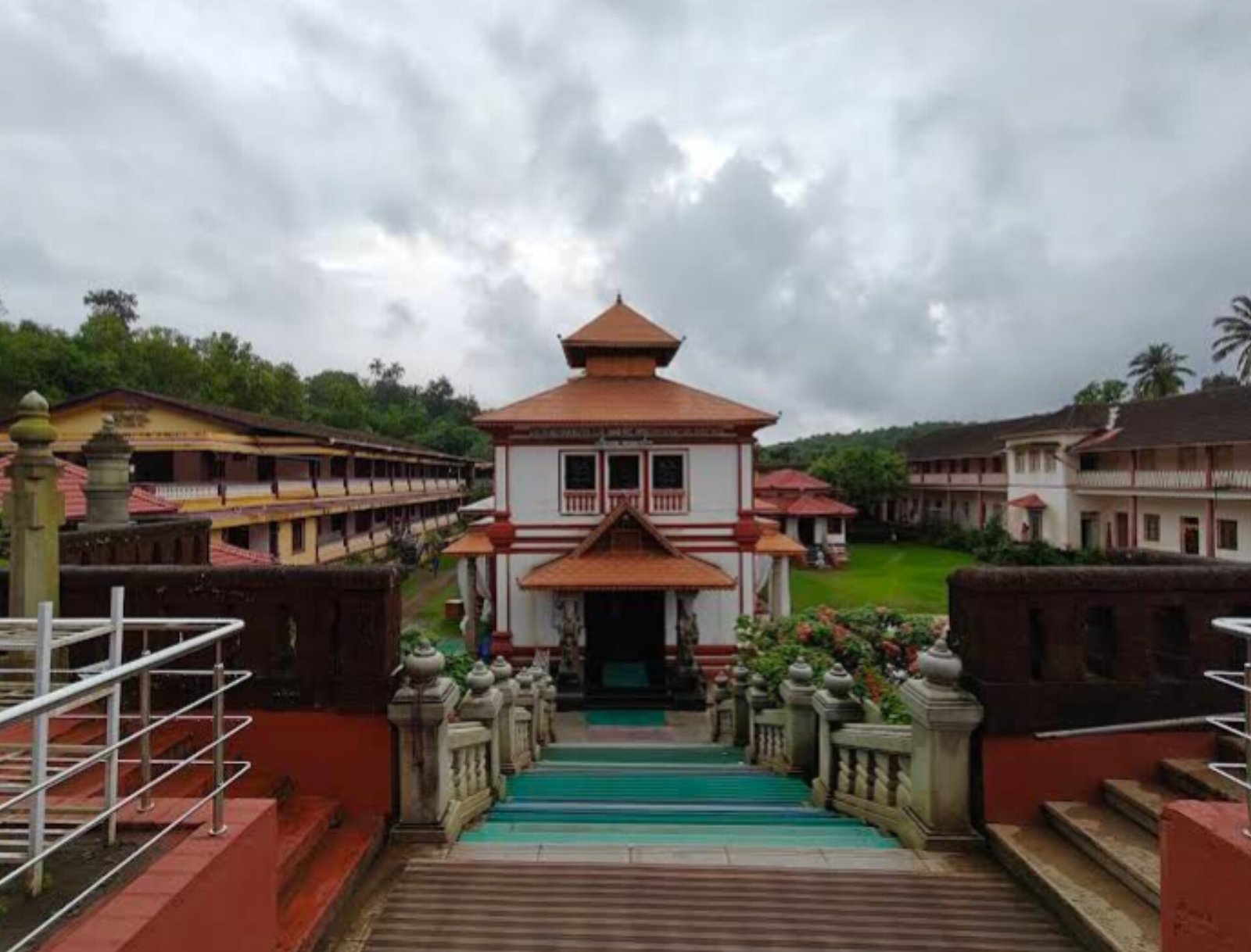
Beyond the shimmering coastline of Goa lies a spiritual world that many tourists never explore. One of its most treasured jewels is the Malikaarjun Temple, located in the quiet town of Canacona. Revered as one of the oldest Shiva shrines in the region, the temple stands not just as a religious landmark but also as a guardian of Goa’s centuries-old traditions. Its rituals, architecture, and festivals tell stories that are as captivating as the temple’s divine presence itself.9
The temple is dedicated to Lord Malikaarjun, considered an incarnation of Lord Shiva, and revered as the guardian deity by many Goan communities. Unlike the more tourist-heavy beaches of Palolem or Agonda that lie close by, the temple’s location in Canacona offers an environment of quietude and lush greenery, making the visit feel almost like stepping into another world. The surrounding Western Ghats hills, thick forests, and calm villages give the temple an aura of timelessness, and as one approaches its premises, the sense of divinity is almost palpable. Pilgrims and devotees believe that Malikaarjun blesses his followers with protection, peace, and prosperity, which explains why this temple is deeply embedded in the daily life and spiritual fabric of the region.
The history of Malikaarjun Temple is as fascinating as its serene setting. Local legends trace the origins of the temple to ancient times, with many scholars and elders suggesting that the deity was worshipped by communities here even before the Portuguese arrived in Goa. The temple is counted among the 14 Mallinath temples dedicated to Lord Shiva scattered across Goa and the Konkan belt, and each has its own cultural significance. Malikaarjun in Canacona is particularly revered because of its association with age-old rituals and festivals that continue to this day. The name “Malikaarjun” itself is believed to have Sanskrit roots, derived from ‘Mallika’ and ‘Arjun’, and symbolically associated with Shiva’s divine energy in union with Parvati. For generations, this temple has been maintained by local communities, and unlike many modernized shrines, it retains its traditional Goan temple architecture and cultural flavor.
Architecturally, Malikaarjun Temple is a sight to behold. It carries the distinct style of Goan temples with a blend of Konkani and Dravidian influences. The temple’s façade is adorned with colorful motifs, wooden carvings, and murals that depict mythological scenes. The ‘deepastambha’ or lamp tower stands proudly in the temple courtyard, symbolizing light, hope, and victory of good over evil. Inside, the sanctum houses the idol of Lord Malikaarjun, placed in an aura of simplicity yet radiating an unmistakable spiritual presence. The interiors feature traditional wooden pillars, sloping roofs, and intricate carvings that make the temple feel both rustic and divine. Unlike the grandeur of many popular Indian temples, Malikaarjun exudes a charm of intimacy—it feels like a temple that belongs equally to the gods and the people. Visitors often find that the ambience of the temple itself brings a sense of calmness, as if the surroundings compel one to slow down and connect with the divine energy.
One of the reasons Malikaarjun Temple is so important in Goa is its role in local festivals and traditions. The temple comes alive during celebrations such as ‘Shisharani’ and ‘Mask Dance Festival,’ which are unique to this region. Shisharani is particularly interesting—it is a ritual where women prepare food by placing a vessel on their heads, balanced with burning coals. This extraordinary ritual, while seeming dangerous, is performed with utmost devotion and faith, symbolizing sacrifice, endurance, and respect to the deity. Another fascinating ritual involves masked dances performed by villagers, which are not merely cultural acts but spiritual offerings meant to please Lord Malikaarjun and invoke his blessings. These festivals draw not just locals but also visitors from across Goa and neighboring states, who come to witness this beautiful blend of faith and tradition.
Tourists visiting Goa often focus on coastal attractions, but a journey to the Malikaarjun Temple provides a completely different experience. Located in Canacona, it lies close to Palolem Beach, Agonda Beach, and Cotigao Wildlife Sanctuary, making it an excellent addition to any South Goa itinerary. Travelers who wish to balance their beach vacation with cultural exploration find the temple visit to be an enriching experience. The drive to the temple itself is scenic, winding through narrow roads, dense greenery, and small villages that reflect Goa’s rural lifestyle. Unlike the bustling tourist zones, this part of Goa offers tranquility, making the spiritual vibe of Malikaarjun Temple even more pronounced. For those who love photography, the temple and its natural surroundings offer endless opportunities to capture the beauty of traditional Goan architecture blended with lush landscapes.
Apart from its religious and cultural value, Malikaarjun Temple also represents Goa’s unique syncretic heritage. Despite centuries of Portuguese colonial rule, during which many temples were destroyed or converted, Malikaarjun survived thanks to the devotion of local communities who rebuilt and preserved it with unwavering faith. Today, the temple stands not only as a sacred space but also as a cultural landmark, reminding both Goans and visitors about the resilience of local traditions and the importance of protecting heritage. Devotees often speak about their personal experiences of receiving blessings here, many narrating stories of answered prayers and divine guidance. For families in Canacona, the temple is not just a religious site—it is a center for social bonding, rituals, and festivals that tie the community together.
In terms of accessibility, reaching Malikaarjun Temple is relatively easy for those exploring South Goa. Canacona is well connected by road, and the nearest railway station is Canacona railway station, while Margao serves as a major hub for travelers coming from North Goa or other states. From Palolem or Agonda, the temple is just a short drive away, and taxis, auto rickshaws, or even rented scooters make the trip convenient. Since it is located off the usual tourist trail, it is advisable for visitors to plan the trip with some time on hand, so they can also enjoy the peaceful surroundings. The temple does not charge any entry fee, making it an open and welcoming place for everyone, whether one comes as a pilgrim, a tourist, or simply a curious traveler wanting to learn about Goan culture.
Spending time at Malikaarjun Temple is not only about rituals or prayers—it is also about experiencing a different Goa, one that is slower, calmer, and rooted in spirituality. The chants of the priests, the smell of incense, the soft ringing of bells, and the gentle rustling of trees in the temple compound all merge together to create a surreal environment. Visitors often sit quietly in the courtyard, reflecting on life or simply soaking in the serenity. For foreign tourists who usually come to Goa for its beaches, such experiences offer an insight into the soul of Goa that goes beyond its touristy image. Many describe their temple visit as one of the most authentic and peaceful experiences of their trip, something they carry back with them long after the sands of the beaches are forgotten.
From a cultural tourism perspective, Malikaarjun Temple is an essential part of South Goa’s identity. Promoting it as a spiritual destination could also help diversify Goa’s tourism industry, which has often been criticized for being too beach-centric. Religious tourism is growing across India, and Goa too has the potential to attract pilgrims and heritage enthusiasts who wish to see more than just its nightlife. For travelers who enjoy exploring lesser-known sites, Malikaarjun Temple offers exactly that—a combination of heritage, devotion, and untouched natural beauty.
Malikaarjun Temple in Goa is not just a temple; it is a journey into the spiritual heart of the state. It represents the endurance of tradition, the devotion of communities, and the beauty of cultural practices that have been preserved for centuries. Whether you are a devotee seeking blessings, a traveler looking to explore the hidden corners of Goa, or simply someone in search of peace and reflection, the temple promises a deeply fulfilling experience. Surrounded by the greenery of Canacona and steeped in mythological significance, Malikaarjun Temple is a reminder that Goa is more than just beaches—it is a land where divinity and culture meet in the most enchanting way. Visiting this temple is like peeling away the layers of Goa’s identity and discovering its soul, one prayer at a time.