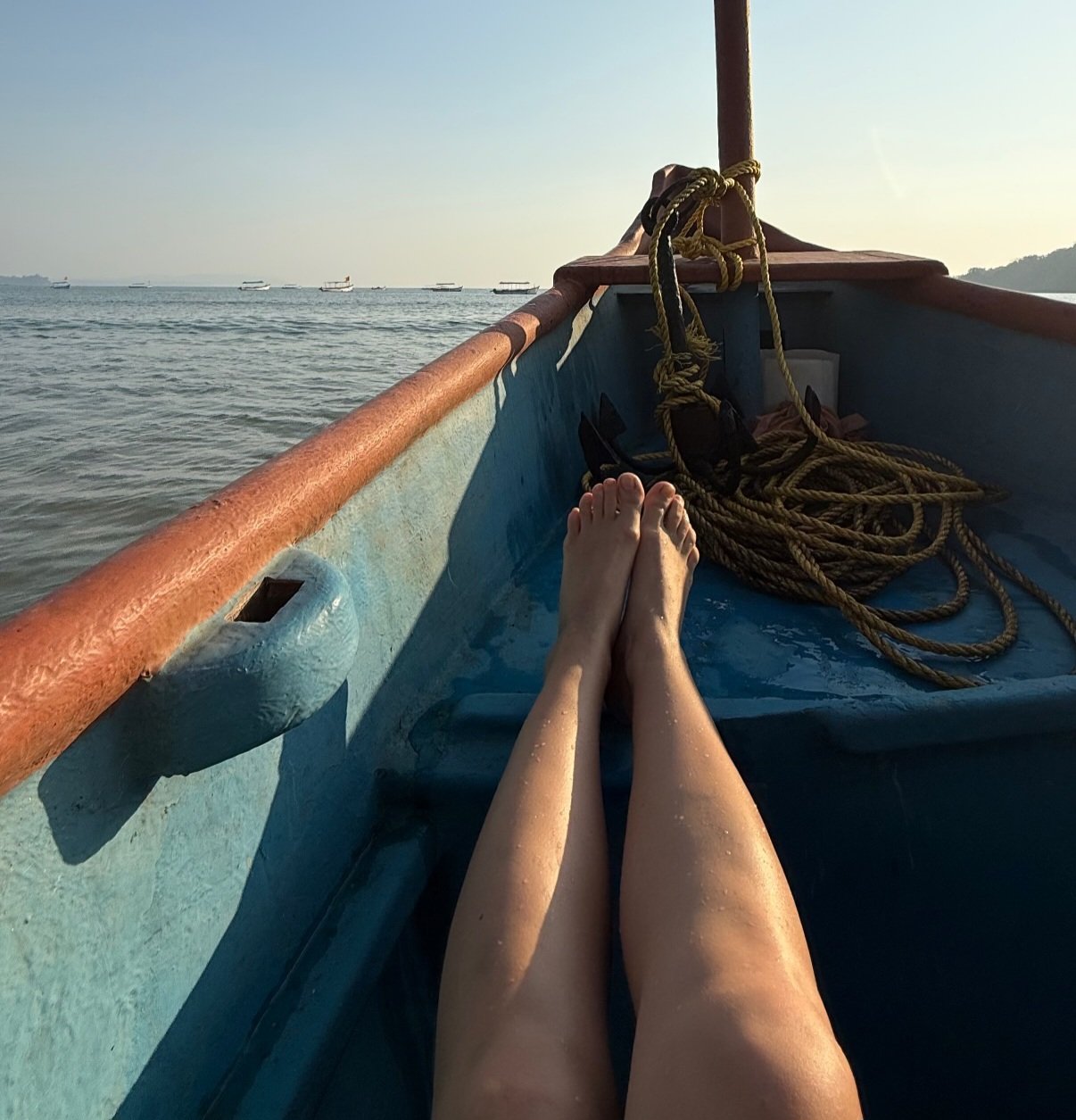
Goa is often imagined as a place that shows everything openly — the beaches, the parties, the smiles, the freedom. Yet the truth is very different. Goa is a land that slowly opens itself, layer by layer, only to those who are patient enough to look beyond what is obvious. The real Goa does not announce itself with loud music or crowded shorelines. It exists quietly in the spaces between places — in early morning silence, in forgotten village lanes, in half-told stories shared over tea, and in landscapes that still breathe without interruption. This unseen side of Goa feels less like a destination and more like a conversation that unfolds over time.
Once you step away from the popular routes, Goa begins to feel deeply personal. The roads become narrower, shaded by coconut palms and old banyan trees. Houses stand with open windows, letting in sea air and afternoon light. People greet each other by name, not out of habit, but connection. Here, life is not rushed. Even time seems to slow down, as if the land itself refuses to move faster than it should.
One of Goa’s most closely guarded secrets lies along its coastline. While famous beaches remain crowded year-round, there are stretches of sand that still remain untouched by commercialization. These beaches are not marked by signboards or lined with shacks. Reaching them often requires effort — a short forest walk, a rocky descent, or directions from a local who trusts you enough to share them. When you finally arrive, the reward is silence, open horizons, and the sound of waves without interruption. These places remind you what the sea felt like before it became an attraction.
In these quiet coastal spaces, locals come not to entertain but to reflect. Fishermen repair nets, elders sit watching the tide, and children learn to swim without supervision. The relationship with the sea here is respectful and deeply emotional. It is not about leisure; it is about life.
Beyond the coast, Goa’s villages hold some of its deepest secrets. Each village feels like a self-contained world, shaped by centuries of shared history. Traditional houses built with laterite stone and clay tiles still stand strong, many of them inherited through generations. These homes are not designed for display; they are built for comfort, climate, and community living. Courtyards serve as gathering spaces, kitchens tell stories through smell, and verandas become places where time pauses.
Walking through a Goan village reveals a lifestyle that values balance over ambition. People know when to work and when to rest. Conversations happen naturally, without urgency. Even disagreements feel softer here, resolved through dialogue rather than distance. This sense of community is one of Goa’s most precious yet overlooked qualities.
Goa’s spiritual life extends far beyond its famous churches and temples. While those structures are important, the deeper spiritual rhythm lives in daily practices. Small shrines hidden under trees, sacred stones near fields, and local guardian spirits worshipped by families reflect a belief system rooted in nature. Faith here is not confined to buildings. It flows through seasons, harvests, and shared rituals. Many festivals are celebrated quietly, known only within villages, yet they carry immense cultural weight.
Nature is another keeper of Goa’s secrets. The forests, hills, and river valleys of Goa form a landscape that feels untouched by modern urgency. Deep within these green spaces are trails known only to locals, leading to waterfalls that appear only during monsoon months. These waterfalls are not crowded tourist spots but living parts of the ecosystem. The sound of falling water, the scent of wet earth, and the presence of birds create an atmosphere that feels almost sacred.
During the monsoon, Goa transforms completely. Rain reshapes the land, filling rivers, reviving fields, and covering hills in mist. This is when Goa feels most alive and least performative. Locals embrace this season, cooking comfort food, repairing homes, and gathering indoors. Visitors who experience monsoon Goa often feel they have discovered a version of the place that few ever see.
Food in Goa also hides its true character behind simplified restaurant menus. Authentic Goan cuisine is deeply seasonal and personal. Many dishes are prepared only at home, using recipes that are never written down. Ingredients are chosen based on availability, not convenience. Meals are slow, shared, and emotional. Eating in a Goan household teaches you that food here is not just nourishment; it is memory, identity, and storytelling served on a plate.
Goa’s past survives quietly in forgotten structures. Abandoned houses, old bridges, broken wells, and neglected chapels stand as silent witnesses to centuries of change. These places may not be restored or photographed often, but they hold stories of migration, trade, love, and loss. Exploring them feels like reading history written not in textbooks, but in walls and ruins.
Art and music form another hidden layer of Goa. Away from commercial stages, folk songs and dances still survive in village spaces. These performances are not rehearsed for audiences but practiced as part of life. Instruments are handmade, lyrics passed orally, and movements learned through observation. Today, a new generation is rediscovering these traditions, blending them gently with modern influences while respecting their roots.
Even Goa’s idea of nightlife has a quieter side. Beyond clubs and parties, there are evenings filled with music around small gatherings, deep conversations, and shared silence. These moments reflect Goa’s long-standing openness to ideas, cultures, and people from different walks of life. This openness did not emerge overnight; it evolved through decades of exchange and acceptance.
Perhaps the greatest secret of Goa is the way it teaches people to slow down. Many who come here for a short holiday end up staying longer than planned. The rhythm of life, the connection to nature, and the sense of freedom begin to reshape priorities. Goa gently reminds you that life does not need to be loud to be meaningful.
In the end, the hidden secrets of Goa are not confined to locations. They live in moments a quiet sunrise, a shared smile, a sudden rain shower, a story told without expectation. Goa reveals its true self only to those who stop chasing experiences and allow the place to meet them halfway. Those who do often leave with something deeper than memories a softer way of seeing the world, and a reminder that the most powerful journeys happen quietly.