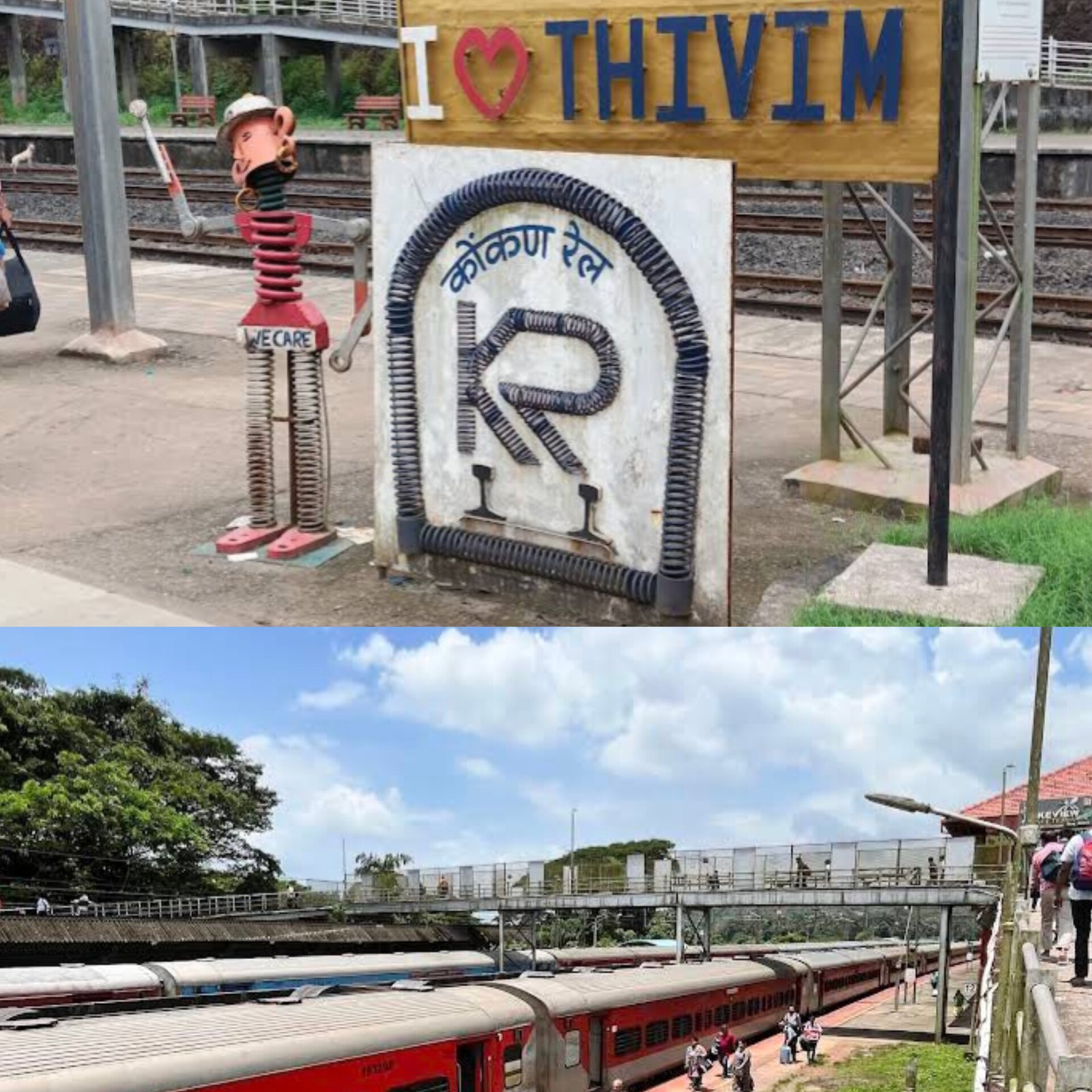
Explore the complete guide to Goa Railway Stations including Madgaon Junction, Thivim, Vasco da Gama, Karmali and more. Learn about history, facilities, routes, and travel tips for your Goa journey.
Introduction to Goa Railway Stations
Goa, known for its golden beaches, Portuguese heritage, and vibrant nightlife, is also a state that has quietly developed a strong railway network. While most travelers associate Goa with its airports and bus routes, the truth is that the railway stations of Goa are the backbone of connectivity, bringing millions of passengers from Mumbai, Mangalore, Bengaluru, Delhi, and across India every year.
Goa’s railway story is fascinating. It is not just about platforms and trains; it is about history, engineering marvels, tourism growth, and the everyday lives of Goans who depend on these stations. In this article, we will explore all major railway stations of Goa — Madgaon Junction, Vasco da Gama, Thivim, Karmali, Pernem, Canacona, Kulem, Verna, and Curchorem-Sanvordem — in depth, covering their history, facilities, connectivity, and travel experiences.
By the end of this detailed guide, you will not only know which station to use for your Goa trip but also understand how each of them contributes to the state’s economy, tourism, and culture.
History of Railways in Goa
The history of Goa’s railway network is closely linked with the Konkan Railway Project, one of India’s greatest engineering achievements. Before the Konkan Railway, Goa was not easily accessible by train, especially from Mumbai. Travelers relied on long road trips or flights, while rail routes through Karnataka were roundabout and time-consuming.
In the 1990s, the Konkan Railway Corporation built a railway line that cut through the Western Ghats and ran parallel to the Arabian Sea. This required constructing more than 90 tunnels and 2,000 bridges, making it one of the most challenging projects in Indian railway history. By 1998, the Konkan Railway was fully operational, revolutionizing travel to Goa.
Today, the Goa railway stations are part of both the Konkan Railway and the South Western Railway network, ensuring smooth connectivity across India.
Madgaon Junction – The Heart of Goa Railways
Madgaon Junction, also known as Margao Railway Station, is the busiest and most important station in Goa. Located in South Goa, it acts as the main junction for trains arriving from Mumbai, Delhi, Bengaluru, Kerala, and other regions.
Why Madgaon is Important
- It is the largest station in Goa with multiple platforms.
- Acts as a junction between Konkan Railway and South Western Railway.
- Serves as the main entry point for South Goa beaches like Colva, Benaulim, Betalbatim, Palolem, and Agonda.
- Handles both passenger and freight trains, making it vital for Goa’s economy.
Passenger Experience
Walking through Madgaon station, you will notice its balance of tradition and modernity. Vendors sell chai, snacks, and Goan sweets while LED displays guide passengers to their trains. The station has retiring rooms, waiting halls, and prepaid taxi stands, making it comfortable for long-distance travelers.
Vasco da Gama Railway Station – The Port Terminus
Located near Goa’s commercial port and the naval base, Vasco da Gama Railway Station is an important terminus. It lies in the city of Vasco, which is close to Goa International Airport at Dabolim.
Key Highlights
- Acts as a terminus station, with trains starting and ending here.
- Popular among local commuters and travelers heading to Vasco, Mormugao, and Dabolim airport.
- Historically linked with Goa’s port trade and naval operations.
Unlike Madgaon, Vasco station has a more functional feel. It may not be as grand, but it plays a critical role in handling port-related logistics and local passenger movement.
Thivim Railway Station – Gateway to North Goa
Overview
If you are planning to stay in North Goa, then Thivim Railway Station is your best option. Located near Mapusa, it provides easy access to popular beaches like Calangute, Baga, Candolim, Anjuna, and Vagator.
Why Tourists Love Thivim
- Closest station to Mapusa town.
- Provides quick access to North Goa’s beaches.
- Quieter than Madgaon, making it more convenient for backpackers and families.
On any given day, you will find Thivim filled with young tourists carrying surfboards, backpacks, and cameras, eager to begin their Goan adventure.
Karmali Railway Station – Closest to Panaji
For those heading straight to Panaji (Panjim), the state capital, Karmali Railway Station is the nearest railhead. It is just 10 km from Panaji and is also the station closest to Old Goa, famous for its churches and cathedrals.
Attractions Nearby
- Basilica of Bom Jesus (UNESCO World Heritage Site).
- Se Cathedral.
- Fontainhas (Latin Quarter of Panaji).
Karmali station may be small, but it is strategically located and highly convenient for tourists who want to explore Goa’s heritage and culture.
Pernem Railway Station – Entry to North Goa’s Hidden Beaches
Pernem is located in North Goa, near the Maharashtra border. It is a less-crowded station but is perfect for travelers heading towards quieter beaches like Arambol, Mandrem, Ashwem, and Morjim.
Unlike Thivim, which serves mainstream tourists, Pernem attracts those who prefer offbeat destinations and peaceful surroundings.
Canacona Railway Station – Gateway to Palolem
Canacona station is in South Goa and is the nearest station to the famous Palolem Beach. Palolem is known for its scenic beauty, dolphin-spotting trips, and relaxed nightlife.
Travelers who want to avoid the busier Madgaon station often choose to get down at Canacona, which offers a more direct route to Palolem and Agonda.
Kulem Railway Station – Gateway to Dudhsagar Falls
Kulem is a small but significant station, mainly because it serves as the base for trips to the Dudhsagar Waterfalls, one of India’s tallest and most spectacular falls.
During monsoon, thousands of tourists visit Dudhsagar, and Kulem station becomes crowded with trekkers, nature enthusiasts, and photographers. It is also part of the South Western Railway line that connects Goa with Karnataka.
Sanvordem-Curchorem Railway Station – The Mining Belt
Sanvordem (Curchorem) station lies in Goa’s mining belt and plays an important role in transporting ore and goods. While it is less touristy, it remains significant for the local economy and industrial transport.
Verna Railway Station – Emerging Industrial Hub
Verna station is close to one of Goa’s largest industrial estates. It is not a tourist-heavy stop but is important for business travelers and logistics. With the rise of Ro-Ro (Roll-on/Roll-off) services, Verna is gaining more prominence in Goa’s railway map.
Facilities at Goa Railway Stations
- Waiting halls and retiring rooms (at Madgaon, Vasco, Thivim).
- Food stalls selling Goan snacks and Indian meals.
- Digital display boards and announcement systems.
- Prepaid taxi and auto-rickshaw stands.
- Cloakrooms and luggage facilities.
- Clean drinking water and toilets.
Connectivity of Goa by Rail
- North Goa access: Thivim, Pernem, Karmali.
- South Goa access: Madgaon, Canacona, Kulem, Sanvordem.
- Commercial/Industrial access: Vasco, Verna.
Goa is well-connected to Mumbai, Delhi, Pune, Bengaluru, Hyderabad, Chennai, Kochi, Mangalore, and Kerala by express trains such as Konkan Kanya Express, Netravati Express, Goa Express, and Matsyagandha Express.
Travel Tips for Train Passengers in Goa
- Always book tickets in advance, especially during festive season and New Year.
- Pre-book taxis or confirm fares before leaving the station.
- Keep an eye on Konkan Railway monsoon schedules, as heavy rains can cause delays.
- For beach trips, choose the station closest to your destination to save travel time.
Future of Goa Railways
Goa’s railway stations are undergoing modernization with electrification, upgraded platforms, and improved passenger facilities. There are also talks of introducing semi-high-speed trains and expanding local connectivity.
With increasing tourist inflow and industrial development, Goa’s railway stations will continue to grow in importance, balancing tourism with local needs.
The railway stations of Goa are more than just transit points. Each one whether it is the bustling Madgaon, the tourist-friendly Thivim, the historic Vasco, or the scenic Kulem tells a story about Goa’s geography, economy, and culture.
If you are planning a trip, choosing the right station can save you time and make your journey smoother. Whether you want to explore the beaches of North Goa, the heritage of Panaji, the hidden waterfalls of Kulem, or the serenity of Palolem, Goa’s railway stations will lead you there.
So the next time you think of Goa, don’t just think of the beaches think of the train journey that begins at one of its many welcoming stations.