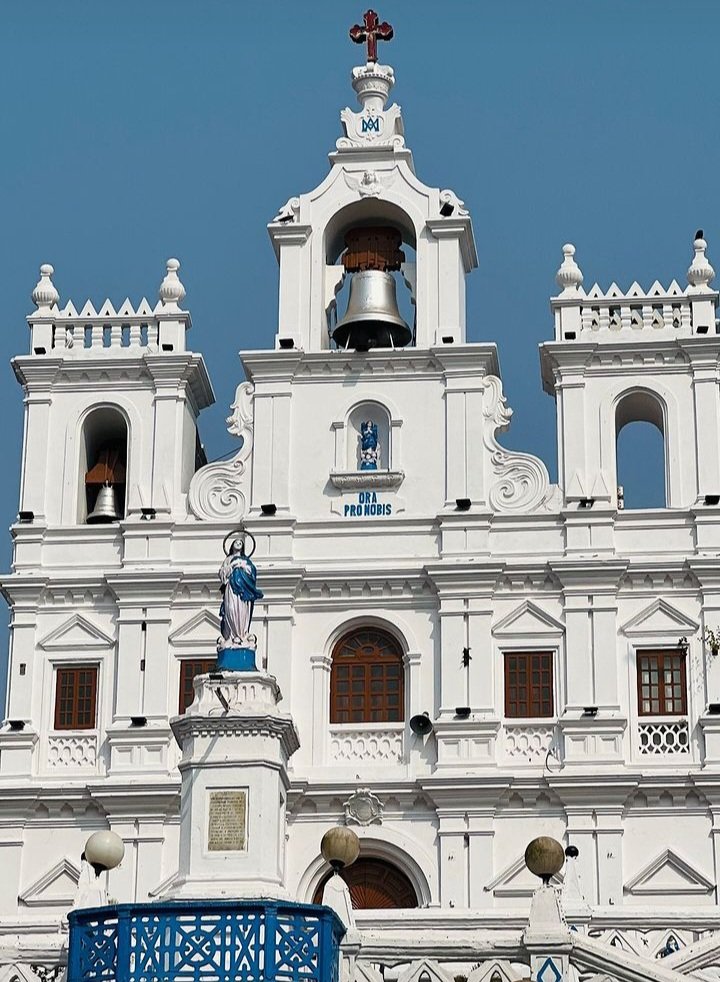
Every December, the heart of Goa beats with a rhythm that echoes both devotion and joy. As the white façade of the Church of Our Lady of the Immaculate Conception glows against the night sky of Panjim, the air fills with hymns, the scent of incense, and the chatter of families coming together to celebrate one of Goa’s most beloved feasts. The Feast of Our Lady of the Immaculate Conception, celebrated on December 8, is not merely a religious observance — it is a living reflection of Goan faith, culture, and community spirit that has endured through centuries. For Goans, this day is more than an event on the calendar; it is a tradition woven deeply into their identity, one that unites generations under the benevolent gaze of the Virgin Mary.
Situated atop the Altinho hill, overlooking the flowing Mandovi River, the Church of Our Lady of the Immaculate Conception stands as one of Goa’s most iconic landmarks. Built originally in 1541 as a small chapel for Portuguese sailors arriving from Lisbon, it was later expanded into a grand church in 1609 to serve as a parish church for the growing population of Panjim. The distinctive Baroque architecture, the twin towers, and the bell — one of the second largest in Goa — have made it an integral part of Goa’s heritage. But what truly gives this church its soul is the annual feast that draws thousands of devotees and visitors each year.
The origins of the feast trace back to the Catholic belief in the Immaculate Conception of the Virgin Mary — the doctrine that Mary, the mother of Jesus, was conceived without original sin. It is a celebration of purity, divine grace, and the beginning of God’s plan for salvation through Mary. The Portuguese, with their deep Marian devotion, brought this tradition to Goa, and over the centuries, Goans made it their own — blending faith with festivity, music, and community participation in a way that feels uniquely Goan.
In the days leading up to the feast, the city of Panjim undergoes a transformation. The iconic church is adorned with hundreds of lights that trace its white steps and façade, creating a breathtaking spectacle visible from afar. Local artists and volunteers come together to decorate the area, setting up stalls selling candles, sweets, and traditional Goan snacks. The roads leading to the church are lined with colorful flags, while the surrounding streets echo with the sounds of Konkani carols and festive chatter.
The celebration begins with a novena — nine days of prayer and preparation. Each evening, masses are held, attended by hundreds of devotees dressed in white, symbolizing purity. Hymns in Konkani, Portuguese, and English fill the church, blending history and emotion into one spiritual experience. For many Goan families, attending the novenas together is a cherished tradition that strengthens familial and communal bonds.
When the day of the feast arrives — December 8 — Panjim awakens before dawn. The morning mass is attended by a sea of devotees, many of whom travel from faraway villages and even from abroad to seek the Virgin’s blessings. The church bells ring joyously as priests lead the solemn procession carrying the statue of Our Lady through the streets, accompanied by altar boys, nuns, and parishioners holding candles and singing hymns. The entire city comes to a standstill as the procession passes — shopkeepers, tourists, and locals pause to watch, some bowing their heads in reverence.
For locals, this day also marks a moment of renewal. Many consider it a time to start afresh — to pray for good health, family unity, and peace. Children and youth actively participate in church choirs, while elders sit quietly in pews, lost in prayer and nostalgia. The spirit of the day is not just in the rituals but in the togetherness that it fosters — the essence of Goan culture that values faith and festivity equally.
After the religious ceremonies, the atmosphere shifts into one of joyous celebration. The open grounds near the church turn into a lively fair — a zatra, as Goans call it. Stalls sell everything from handmade rosaries to local delicacies like bebinca, doce de grao, and sannas with sorpotel. Music floats through the air — traditional Goan tunes played on guitars and violins — as families stroll through, children clutching balloons, and elders catching up with old friends. The fair captures the true Goan spirit — where faith meets festivity, and joy is shared without bounds.
In the evening, the church’s beauty reaches its peak. Its magnificent illumination against the night sky, with thousands of twinkling lights cascading down its twin flights of steps, looks almost celestial. The entire area comes alive with people taking photographs, lighting candles, and offering prayers. For travelers and photographers, this is a mesmerizing sight — a perfect blend of spirituality and beauty. The feast also sees cultural programs with local musicians, traditional dance performances, and Konkani songs that narrate the story of Mary’s grace and the Goan devotion to her.
The Feast of Our Lady of the Immaculate Conception is not confined to Catholics alone; it welcomes people of all faiths. Hindus, Muslims, and others often visit the church during this time, lighting candles or simply soaking in the festive atmosphere. This inclusiveness is a hallmark of Goan culture — a reflection of the state’s secular spirit where respect for each other’s faiths forms the foundation of social harmony.
What makes the Panjim feast stand out from others across Goa is its location and the way it symbolizes the city’s identity. The church, standing tall over the old Latin quarters of Fontainhas, connects the old and new Panjim — just as the feast connects past and present. Visitors strolling down the winding lanes of Fontainhas during this time can feel the palpable energy — colorful houses adorned with lanterns, local bakeries selling festive sweets, and the sound of bells echoing through narrow streets. The entire neighborhood becomes part of the celebration, turning Panjim into a living festival.
The feast also attracts tourists from across India and abroad. Many plan their Goan holiday in December just to witness this spectacle. For travelers, it offers a rare opportunity to experience Goa beyond its beaches — to see its soul through its faith. Attending the feast allows visitors to immerse themselves in Goan traditions, interact with locals, and understand the unique blend of Portuguese legacy and Indian warmth that defines Goa.
For photographers and culture enthusiasts, the event provides countless frames — the illuminated church, the procession of candles, the smiling faces in the crowd, and the intricate detailing of Goan architecture. Writers and artists, too, often find inspiration here — in the gentle harmony between devotion and celebration that this feast so beautifully encapsulates.
Historically, the church’s location is significant. During the Portuguese era, the site was the first place sailors would visit after arriving in Goa. They would climb the hill to thank the Virgin Mary for safe passage across the seas. Even today, many Goans who work abroad return during this time to express gratitude and reconnect with their roots. It’s a homecoming of faith — a reminder of where they belong.
The Feast of Our Lady of the Immaculate Conception also highlights the deep relationship between religion and art in Goa. The church’s interiors, with their altars gilded in gold, intricate carvings, and statues of saints, are a testament to centuries of devotion and craftsmanship. During the feast, every detail — from flower arrangements to choir rehearsals — is done with love and care by parish volunteers. This sense of collective participation is what keeps the tradition alive, generation after generation.
Culturally, the feast represents the best of Goan hospitality. Locals open their homes to friends and relatives, offering traditional dishes and sweets. Goan women prepare festive meals that combine Portuguese and Indian influences — prawn balchão, vindaloo, pulao, and bebinca are staples of the day. Music plays in the background, laughter fills the rooms, and conversations flow easily. It’s not just about religion — it’s about belonging, about community, and about the simple joy of being together.
As night deepens, the city quiets down, but the glow of the church remains — serene, majestic, and timeless. For those who stand before it, gazing up at the illuminated statue of Mary, there’s an undeniable sense of peace. It’s as if the Virgin herself watches over Panjim, her presence comforting every soul who comes before her.
For travelers planning to witness this magnificent feast, getting to Panjim is easy. The city is well-connected by road, rail, and air. From Dabolim Airport, it’s just about a 45-minute drive to the church. Local transport options like taxis and buses are readily available. If you’re staying in North Goa — in areas like Miramar, Dona Paula, or Candolim — the church is only a short ride away. Visiting during the early evening is recommended, as the lights are best viewed after sunset, and the crowds, while large, are friendly and welcoming.
Nearby, travelers can explore Fontainhas, the Latin Quarter of Panjim, famous for its colorful Portuguese-style houses, art galleries, and cafes. The Mandovi promenade, a short walk from the church, offers river cruises and stunning night views of the illuminated city. For those seeking to extend their experience, Panjim’s central location makes it easy to visit other historical churches in Old Goa, like the Basilica of Bom Jesus and the Se Cathedral, both UNESCO World Heritage Sites.
The best time to visit Panjim for this feast is from early to mid-December, when the weather is pleasant, and the city is at its most vibrant. The days are filled with sunshine, the nights with music, and the overall atmosphere is festive yet peaceful. Booking accommodation in advance is advisable, as hotels tend to fill quickly around the feast. Boutique guesthouses in Fontainhas or riverside hotels near Miramar offer convenient stays.
In the grander picture of Goa’s cultural calendar, the Feast of Our Lady of the Immaculate Conception marks the beginning of the Christmas season. It sets the tone for weeks of celebration, church services, and community gatherings that continue until New Year’s. It is, in many ways, a curtain-raiser to the festive spirit that defines December in Goa.
But beyond the lights, the food, and the music, lies the real essence of this feast — faith. A faith that has survived colonization, modernization, and time itself. A faith that continues to bring people together — Catholics and non-Catholics alike — in celebration of purity, hope, and love.
Standing before the church on the night of December 8, one can feel what words often fail to capture — the warmth of devotion, the pride of heritage, and the magic of a community that knows how to celebrate life while honoring its roots. The sight of thousands of candles flickering in the cool night air, the hum of prayers mingling with laughter, and the glow of the illuminated façade — it all forms a memory that lingers long after the feast has ended.
For Goa, this feast is more than just a religious occasion. It is a celebration of who the Goans are — joyous, faithful, welcoming, and deeply connected to their land and traditions. It is a living expression of Goa’s soul, where every light lit on the church steps is a symbol of hope, every prayer whispered is a thread of continuity, and every smile shared is a reflection of divine grace.
And so, year after year, when the first week of December arrives, Panjim transforms once again — its streets alive with devotion, its people filled with joy, and its heart beating in rhythm with the bells of the church. The Feast of Our Lady of the Immaculate Conception is not just celebrated; it is experienced, felt, and remembered — as a timeless union of faith, culture, and the radiant Goan spirit.