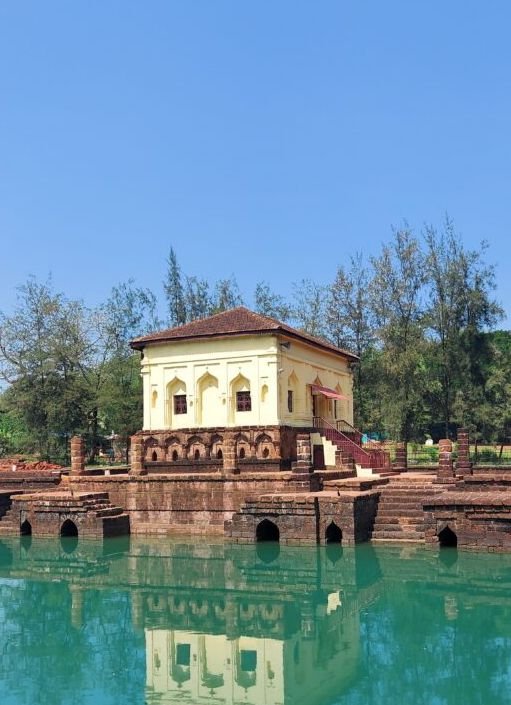
The Safa Masjid, also known as the Safa Shahouri Masjid. Built in the 16th century, this mosque not only represents an important chapter in Goa’s Islamic heritage but also encapsulates a story of survival, adaptation and harmony through centuries of change. Known as Goa’s oldest functioning mosque, Safa Masjid invites visitors not only with its architectural simplicity but with the layers of history, culture and faith that it quietly bears.
we explore the Safa Masjid in depth, weaving through its origins, architectural features, cultural significance, its context within Goan history, and what it means today for locals and visitors alike.
Historical Background: Goa in the 16th Century
To fully appreciate the Safa Masjid, one must step back into the milieu of Goa in the 1500s. In the early part of the century, the region that is now Goa came under various powers, including the Adil Shahi Sultanate of Bijapur. According to official Goan government portals, around 27 mosques were commissioned in Goa during the reign of Ibrahim Adil Shah I in the mid-16th century.
The Safa Masjid is believed to date from 1560, built under Ibrahim Adil Shah in the region of Ponda. When Portuguese colonial power advanced in Goa, many Islamic structures were destroyed or re-purposed during the eras of the Inquisition and religious transformation. Remarkably, the Safa Masjid survived through those tumultuous times a testament to its structural resilience and perhaps to its less conspicuous, tranquil location.
It is in this crucible of political, religious and cultural change that Safa Masjid stands. It provides a living link to the era when Islamic patronage and Goan society co-existed in a way that left enduring physical and intangible heritage.
“Safa” in Arabic means “pure” or “clean” (sometimes chastely so), and the mosque’s name evokes this connotation of simplicity and sanctity. The full name “Safa Shahouri Masjid” sometimes appears in historical references, hinting at its status and patronage.
Located approximately 2 km west of Ponda town on the main Panjim-Bangalore highway, the mosque stands in a relatively serene setting, away from the hustle of coastal Goa. Because of this location, many of the pressures of mass tourism and urban sprawl that affect other monuments in Goa are less intense here allowing a more contemplative visit.
The significance of the mosque is multifold:
- It is one of the oldest surviving mosques in the state of Goa.
- It reflects the fusion of indigenous Goan and Islamic architectural elements.
- It stands as an active place of worship for the local Muslim community, and a living heritage site, not just a relic.
- It is recognized by the Archaeological Survey of India (ASI) as a protected Monument of National Importance.
The Safa Masjid is deceptively modest in scale yet rich in architectural interest. The main prayer hall is a rectangular, single-chambered space with a terracotta-tile roof somewhat reminiscent of old Portuguese-style homes that were common in Goa in the colonial era.
One of the most striking architectural features adjacent to the main hall is a large laterite-stone masonry water-tank (sometimes described as a pool or reservoir) which is said to have dozens of small chambers (hammams) and mihrab-style arches in its design. This tank sits to the south of the prayer hall (rather than in front, as is typical in some mosques elsewhere), an arrangement that suggests local adaptations and craftsmanship.
Elements worth noting:
- The use of laterite stone, common to Goan construction, gives the mosque a ground-ed, earthy feel.
- The terracotta-tile roof sits upon a high base, giving the building modest elevation.
- The arches and decorative motifs show Islamic design sensibilities, while the overall proportions and materials reflect local Goan vernacular architecture.
- The surrounding garden and fountains (now largely in ruins) speak to a once-lush complex built for not just worship but tranquillity and reflection.
In other words, the mosque stands at the intersection of the local and the international, of Goan building traditions and Muslim religious design — making it unique in its region.
Historical Challenges and Surviving Through Time
During Portuguese rule, especially under the inquisition and religious suppression of Islamic and Hindu sites, many religious structures were destroyed or repurposed. Yet Safa Masjid, though damaged and left in ruins for some period, managed to endure. In the mid-20th century and beyond, some restoration work has brought the mosque back into contemporary use while retaining its historical character.
These aspects underline the mosque’s resilience and importance: not merely as an architectural monument, but as a symbol of continuity for the local Muslim community, and as a reminder of Goa’s plural heritage.
Rituals, Community and Living Heritage
Unlike many heritage sites that are frozen in time, Safa Masjid remains a functioning mosque. The local Muslim community uses it for daily prayers, as well as major festivals such as Eid-ul-Fitr and Eid-ul-Zuha, which are celebrated here with considerable devotion.
This living aspect means that visitors see not just stone and mortar, but a place where faith continues to play out in everyday life. The spatial experience of entering a centuries-old sanctuary, seeing the quiet prayer hall, the water tank, the trees around becomes layered with both history and the pulse of contemporary devotion.
Moreover, because the mosque stands somewhat away from the tourist hotspots, it offers a reflective atmosphere. Visitors often describe it as a place where the rush of Goa’s beaches and nightlife simply drops away, and one is left with silence, nature and architecture speaking in gentle tones.
Location, Surroundings and Tourist Insights
The mosque’s location within Ponda taluka places it in a part of Goa less frequented by large tourist crowds than the coastal areas. Ponda is known for its temples, lush landscapes, and quieter pace — making it ideal for heritage seekers. The Safa Masjid, located about 2 km from Ponda town, is accessible via main roads from Panjim or other parts of Goa.
For visitors, some practical aspects to note:
Why Safa Masjid Matters: Cultural and Architectural Legacy
There are several reasons why Safa Masjid’s significance extends well beyond its physical presence:
- A rare survivor: In a region where many historical Islamic structures were lost, the mosque stands as one of the few remaining from its era.
- Architectural hybridity: It showcases how local Goan construction materials and styles melded with Islamic design — a testament to cultural adaptation.
- Community continuity: It remains a living centre of faith, not just a museum piece; this continuity adds depth to its heritage value.
- Symbol of plural Goa: The mosque reminds us that Goa’s story is not simply of churches and colonial forts — it includes Islamic architecture, Muslim communities, and inter-religious histories.
- Peaceful heritage tourism: For visitors who wish to go beyond party beaches and packed markets, Safa Masjid offers a quiet, contemplative stop, helping diversify the tourism narrative in Goa.
Visitor Experience: What to See, What to Feel
When you arrive at Safa Masjid, take time to walk slowly through the complex. Some of the key features to pay attention to:
- The prayer hall’s modest exterior and simple roofline — which contrast with more grandiose mosques elsewhere, yet hold their own quiet dignity.
- The water tank with its chambers: the laterite masonry, the arches, the turquoise water — it is a visual anchor of the site, hinting at the original grandeur of the mosque complex.
- The surrounding trees and garden remains: even though much of the historic landscaping is gone, there is still a sense of enclosure, of calm.
- The inscriptions, though limited, and the architectural details such as arches and terracotta tiles — these invite reflection on the craftsmen who built the mosque centuries ago.
- Observing prayer time (if permissible as a visitor) can reinforce the living nature of the place. Respectful silence and minimal disturbance add to the experience.
Visitors often leave describing Safa Masjid as “a hidden gem in Goa” — a place where the typical beach-tourism rush fades away, replaced by silence, history and a subtle spirituality.
Safa Masjid in Context: Goa’s Wider Heritage
To understand Safa Masjid is also to situate it within Goa’s layered heritage — from Hindu temples and Christian churches to coastal forts and colonial legacies. Goa is often framed as a beach destination, and much of the tourism focuses on sun, sand and nightlife. Yet inland, in places like Ponda, there are quieter stories of faith, architecture and communities that pre-date much of the modern tourist infrastructure.
Safa Masjid brings into focus one such story. Built around the same time as other significant structures in Goa, the mosque reminds us of the 16th-century confluence of Muslim rule (Adil Shahi), Hindu traditions and, soon after, Portuguese colonialism. It stands in contrast to many of the better-known Christian monuments in Goa, offering a different dimension of the region’s spiritual and architectural history.
Moreover, the mosque’s survival and restoration speak to changing attitudes toward heritage — giving due recognition to Islamic architecture in a region where much of the focus has been on temples and churches. Its listing by the ASI as a monument of national importance helps protect its future.
Modern Relevance: Heritage, Tourism and Harmony
In today’s Goa, Safa Masjid holds modern relevance in multiple ways:
- Cultural tourism: For travellers seeking more than beaches, the mosque represents an opportunity to explore off-beat Goa, heritage architecture and quiet spirituality.
- Community identity: For the local Muslim population, the mosque remains a touchstone — of faith, of history, of shared past.
- Education and research: Scholars of Indo-Islamic architecture, Goan history, or heritage conservation find the mosque a valuable case study of survival, adaptation and cross-cultural design.
- Inter-religious harmony: Goa has a multi-faith heritage. The existence of Safa Masjid alongside temples and churches fosters a sense of plural legacy, that different faiths have inhabited and continue to inhabit the region.
- Conservation ethos: The mosque’s restored status underlines the importance of preserving structures not simply for their flamboyance, but for their subtle historical value.
In this way, Safa Masjid is not frozen in the past; it actively participates in the present conversation about heritage, identity and tourism in Goa.
Challenges and Conservation
While Safa Masjid is fortunate to have survived, it nonetheless faces challenges typical of many heritage sites:
- Maintenance of older materials such as terracotta roof tiles and laterite stone masonry demands constant attention given Goa’s humid coastal climate.
- Visitor infrastructure is modest: unlike major tourist sites, it lacks large visitor centres or extensive signage; thus, awareness among tourists is relatively low.
- Balancing act between religious use and tourism: ensuring that the mosque remains a place of worship first, and a tourist site second, requires sensitivity.
- Contextual development pressures: As Goa develops further, even inland areas like Ponda can face pressure from real-estate, infrastructure and changing land-use; keeping the mosque’s environment intact is important.
- Documentation: While historians recognize the mosque’s age and significance, precise dating remains uncertain (there is no extant inscription that gives the exact construction date) which means that heritage interpretation must rely on architectural study and historical records.
Addressing these concerns will help the mosque remain not just a relic, but a living heritage landmark for future generations.
How to Visit Safa Masjid: Practical Tips
If you’re planning a visit, here are some helpful pointers:
- Getting there: From Panjim or other parts of Goa, head towards Ponda town. The mosque is located approximately 2 km west of Ponda town, on the main Panjim-Bangalore highway.
- Best time: October to March offers comfortable weather; avoid heavy monsoon months for ease of travel.
- Timing: The mosque is open for worship and likely open for visitors during daytime; however check locally for any restrictions especially during prayer timings.
- Dress code: As a religious site, modest dress is advised. Remove shoes before entering the prayer hall.
- Photography: Respect religious practices. While photographing the exterior and general architecture is usually fine, avoid disrupting worshippers.
- Nearby attractions: While in Ponda you can also visit nearby temples, nature trails, spice plantations or the famous Bondla Wildlife Sanctuary — making for a full heritage-plus nature day trip.
- Time allocation: A calm visit exploring the mosque and grounds might take around 30–45 minutes; factor travel time to and from if you are coming from the coast.
- Quiet demeanor: Unlike Goa’s loud party zones, this site is peaceful. Embrace the silence, sit by the water tank or under the trees and feel the atmosphere.
Reflection: What It Feels Like to Be There
Walking through the gates of Safa Masjid, you leave behind the rumble of the highway and enter a quieter realm. The prayer hall, with its terracotta roof and laterite walls, gives you the sense of an unassuming structure that has for centuries held reverent purpose. The adjacent water tank with still emerald-blue water invites you to pause, to reflect. Birds may flit in the trees. The distant sounds of life in nearby Ponda drift in.
There is no flashy marketing or loud crowd. There is simply the hush of history, the calm of faith, and the patina of time. In that stillness, you realise this: heritage survives not by grandeur alone, but by continuity, by communities caring for it, by the quiet acts of maintenance, worship and respect. Safa Masjid stands because people cared.
And when you leave, you carry away not just photos, but an inner calm, a deeper sense of Goa’s layered identity, and a memory of a building that is both ancient and alive.
A Heritage Worth Discovering
In a land famed for its beaches and vibrant tourism, the Safa Masjid is a gentle reminder of another dimension of Goa’s soul. It speaks of 16th-century Muslim patronage, of architectural adaptation, of Christian-Hindu-Muslim worlds intersecting, and of people simply going about their faith over centuries.
For the visitor willing to go beyond the superficial, the mosque offers an experience of calm, of history, of cultural richness. It adds depth to a Goa itinerary that might otherwise be filled with sunlit sand and party beats.
By exploring Safa Masjid, you do more than see a building: you time-travel into a quieter era, you honour the past, and you connect with a community’s continuous story. And in a place where tourism often races, this sanctuary invites you to stop, breathe, reflect.
Go visit. Sit by the water tank. Look at the terracotta roof under the Goan sky. Listen to the call of the mosque-bell-like silence. And you’ll find in Goa more than sun and sea you’ll find heritage that stays.