Goa often gets introduced to travellers through images of crowded beaches, neon lights, markets buzzing with tourists, and parties that stretch late into the night. But there is another Goa, a quieter, older, more soulful version that hides behind the popular postcard scenes. This hidden secret of Goa is not a single place, but a collection of experiences, landscapes, stories, and emotions that reveal themselves only when one looks beyond the obvious. It begins in the early morning hours, when the sun rises slowly over coconut groves and fishermen push their boats into the water, long before tourists step out of their hotels. Watching these moments feels like discovering a Goa that has remained unchanged for generations, a Goa that still carries the rhythm of a simple life. Most travellers don’t see this side because they arrive at noon, head straight to famous beaches, and believe Goa is only the loud, playful face that the world constantly advertises. But the real Goa hides in its silent corners, where the past and present breathe together. The true hidden secret of Goa lies in its ability to be two things at once: a vibrant celebration for those who seek noise, and a deep sanctuary for those who listen carefully to the subtler music of its land.
The hidden side of Goa begins in its villages, many of which feel untouched by tourist behaviour. These villages stretch along narrow lanes lined with banyan trees, colourful Portuguese-style houses, tiny chapels, and paddy fields that sparkle under the sun. Places like Aldona, Moira, Chorao, Divar, and Siolim still move at a pace that the modern world seems to have forgotten. Old wells stand next to centuries-old houses with sloping red-tiled roofs, while local aunties sit on verandas cleaning rice or cutting freshly plucked vegetables. Children cycle freely through the lanes, their laughter mingling with the chirping of birds, and elders gather under trees discussing the same topics they have shared for decades. There’s a timelessness to these villages that feels magical, especially after sunset when yellow street lamps cast gentle glows on winding roads. The tranquillity here is something many travellers overlook because they believe Goa begins and ends at its beaches. But the hidden secret of Goa is that its soul is not at the coastline. It rests in the quiet dignity of its villages, where the ordinary becomes extraordinary simply because it has remained honest and untouched.
One of the most surprising parts of Goa’s hidden charm is its relationship with nature. Goa is known for beaches, but the forests, rivers, and backwaters carry a beauty that feels far more intimate. If one travels inland, the landscape changes from sandy shores to dense green canopies, where waterfalls run through untouched terrain and hiking trails offer moments of solitude rarely experienced on crowded beaches. Streams in the Ghats flow clear even during winter, reflecting sunlight like scattered diamonds. Birds of all colours move through the branches, and if you stay quiet long enough, you might see deer, monkeys, or even the occasional wild bison in the distance. In these forests, Goa shows a side that cannot be advertised easily because its beauty cannot be captured fully in photographs. It is a beauty that must be felt — through the silence, the damp smell of leaves, the cool touch of running water, and the sense that you are standing in a place where nature still speaks in its original language. These hidden eco-systems form a living secret of Goa, one that travellers only discover when they step away from the usual itinerary.
Along the rivers of Goa, another layer of hidden beauty emerges. The Mandovi and Zuari are the most known, but countless smaller rivers and backwaters twist through the land like veins carrying life to every corner. Early mornings on these waters reveal scenes that most tourists never witness. Fishermen steering small canoes, mist rising slowly from the surface, birds diving for their first catch, and the distant sound of church bells ringing through the calm air. The mangroves along the banks hold rich biodiversity, with creatures that thrive only in these sheltered environments. Boatmen who know these waters can show travellers secret inlets where the river widens into peaceful lagoons, creating a mirror-like reflection of the sky. Watching a sunrise here feels like stepping into another world, where time slows down enough to let you absorb each moment fully. Many locals say that the rivers of Goa speak differently in December and January, when the winter breeze blows softly and the water carries a quiet elegance. For those who take the time to explore them, these rivers become one of Goa’s most precious hidden secrets.
Goa also hides stories in its old architectural wonders scattered across both North and South. Most people know about the Basilica of Bom Jesus or the churches in Old Goa, but the real hidden marvels lie in the lesser-known chapels tucked into village corners, heritage homes guarded by old families, and abandoned structures that whisper tales from centuries ago. Walking into a traditional Goan home, you often find carved wooden windows, patterned tiles, wide halls, and old family artefacts preserved with love. Many of these houses are more than 150 years old and still stand strong because they were built with unique craftsmanship using laterite stone, local materials, and designs meant to balance beauty with the local climate. The hidden charm lies not only in their structure but in the stories their owners share — stories of Portuguese influence, family legends, festivals celebrated across generations, and memories of a time when Goa lived at a slower, simpler rhythm. Even some forgotten chapels, overgrown with roots and moss, reveal a mysterious charm for those who stumble upon them. They remind visitors that Goa has layers of history waiting to be uncovered if one is patient enough to look beyond the familiar routes.
Another hidden secret of Goa is in its food culture, which goes far deeper than the typical seafood shacks lining the beaches. In small homes, corner eateries, and village kitchens, traditional recipes are preserved with a devotion that makes each dish feel like a piece of heritage. Dishes like sorpotel, sanna, ambot-tik, xacuti, choris pao, kokum curry, and seafood kalimiri are prepared with techniques passed down through families. The ingredients come from local markets — freshly caught fish, spices ground by hand, coconut scraped just minutes before cooking, and produce grown in backyard gardens. The rhythm of a Goan kitchen carries the essence of its culture. Smoke rising from a wood-fired stove, grinding stones echoing softly, and the aroma of spices filling the air create a sense of homeliness that cannot be replicated in commercial restaurants. Eating a traditional Goan meal served in a quiet home or a tucked-away local shack offers a glimpse into the region’s authentic culinary identity. This is a Goa that remains hidden unless one ventures into the villages or speaks to locals who take pride in feeding travellers with warmth and tradition.
The festivals and cultural practices of Goa reveal another secret side of the state. While tourists focus on New Year celebrations and music festivals, the most intimate expressions of Goan culture take place in small neighbourhood squares, churches, temples, and community halls. Feasts dedicated to local saints, village processions, traditional dances like Fugdi and Dekhni, and local theatre performances showcase a cultural richness that survives because of the passion of ordinary people. During village feasts, food stalls appear overnight, musicians gather with violins and ghumots, and families arrive dressed in traditional outfits, creating a colourful celebration that feels deeply rooted in community ties. Most visitors have no idea that Goa’s cultural identity is this rich and diverse because it rarely appears in advertisements. Yet this is the real Goa — a land where community bonds remain strong, where festivals are celebrated with devotion, and where heritage is passed on quietly through rituals and performances that have survived for generations.
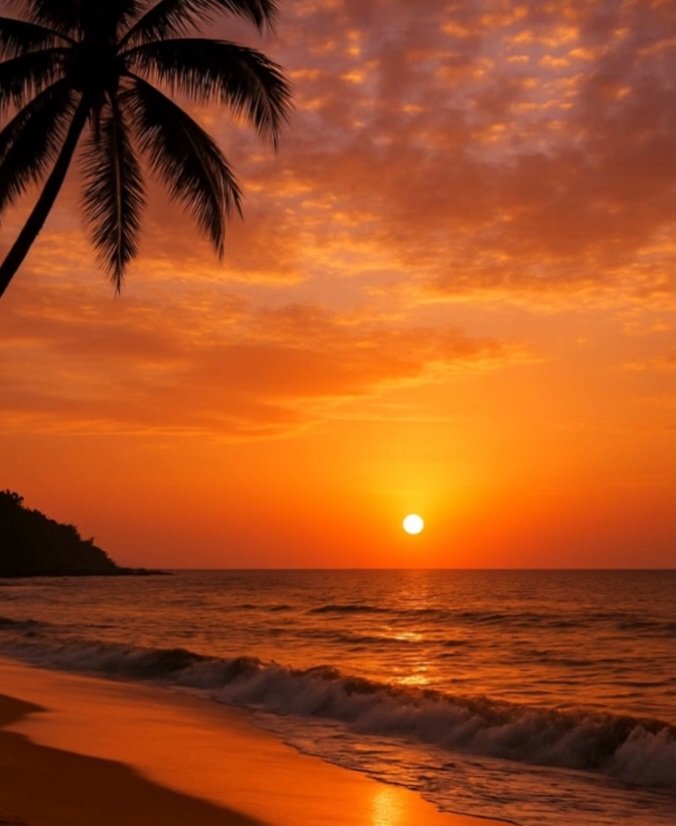
One of the most beautiful hidden secrets of Goa is its sunsets away from the crowded beaches. While thousands gather at Baga or Calangute to watch the sun sink into the sea, the more magical sunsets happen in isolated corners of the state. Unpopular beaches, hidden cliffs, riverbanks, hilltops, and quiet bridges offer views that feel untouched and private. At these spots, the sunset feels different — slower, softer, and more personal. The sky shifts colours gently, fishermen row back in silhouettes, birds fly home across the flaming sky, and the world seems to hold its breath for a few minutes. In such moments, Goa feels like a secret whispered only to you. Travellers who discover these hidden viewpoints often describe them as spiritual experiences because the quietness of the setting allows the mind to rest and reconnect with itself. These sunsets show the side of Goa that is not loud or dramatic, but deeply peaceful and healing.
Goa’s hidden secret also lives in its local communities, who carry warmth, humour, and generosity that travellers often remember long after returning home. Conversations with locals offer insights into their lives, beliefs, routines, challenges, and joys. A fisherman explaining the sea’s moods, an elderly woman sharing recipes, a young musician performing at a small café, or a shopkeeper narrating stories about old festivals — each interaction reveals a layer of Goa not found in guidebooks. Locals often know secret paths to waterfalls, lesser-known beaches, historic wells, abandoned forts, or old caves that only the village people talk about. These stories and encounters turn travel into connection, transforming Goa from a destination into a human experience.
What makes the hidden secret of Goa truly special is that it exists simultaneously with the tourist Goa. It never hides intentionally; it simply waits patiently for the right kind of traveller — someone curious, respectful, slow, and observant. This secret Goa does not announce itself through advertisements or famous landmarks. Instead, it reveals itself through moments: the sound of church bells drifting across the fields at dawn, a splash of oars cutting through river water, children waving as you pass their homes, the intense smell of spices in a traditional kitchen, the soft light falling on ancient laterite walls, or the quiet conversation shared with a stranger under a palm tree. Each of these moments forms a thread that, when woven together, shows the true fabric of Goa’s identity.
In the end, the hidden secret of Goa is not a specific beach or village or waterfall. It is the entire unseen world that exists alongside the famous scenes. It is the land’s rhythm, the people’s warmth, the untouched nature, the lingering history, and the gentle stories that unfold only when you travel slowly. The secret of Goa is the feeling of discovering something personal and precious — something that remains in your heart, long after the trip is over. It is the Goa that most travellers never meet, yet the Goa that defines the state more authentically than any crowded beach or night market ever could. And when one finally discovers this hidden Goa, it becomes impossible to see the place the same way again, because you realise the state is much deeper, richer, and more soulful than what the world usually shows.