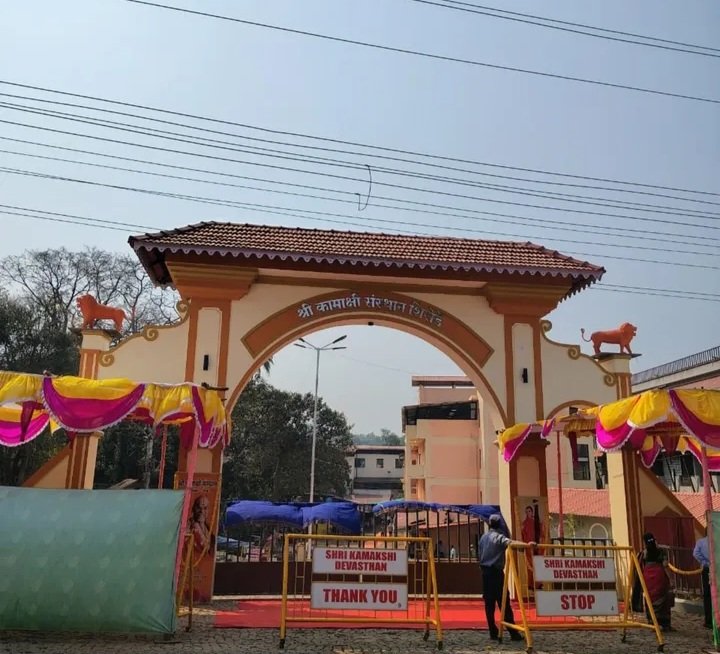
Tucked away in the peaceful village of Shiroda in South Goa, the Kamakshi Temple stands as one of the most revered and culturally rich shrines in the region. Unlike Goa’s usual image of beaches, parties, and nightlife, this temple represents the soul of Goa — calm, divine, and steeped in ancient traditions. The Kamakshi Temple is dedicated to Goddess Kamakshi, an incarnation of Goddess Parvati, known as the compassionate mother who fulfills the wishes of her devotees. The temple not only attracts thousands of Goan Hindus but also spiritual seekers from across India, drawn by its serene surroundings and divine energy.
This temple offers a different side of Goa — one where you hear the sound of temple bells instead of beach waves, where the fragrance of incense fills the air, and where faith meets timeless architecture. Let’s dive deep into the history, mythology, architecture, festivals, and unique charm that make Kamakshi Temple in Shiroda an unmissable destination for both travelers and devotees.
The Historical Roots of Kamakshi Temple
The Kamakshi Temple of Shiroda carries a fascinating history that connects it to the ancient Hindu traditions of the Konkan region. According to local historians, the temple was originally located in Raia (Salcete) before the Portuguese era. During the 16th century, when the Portuguese began converting temples into churches and discouraging Hindu practices, the idol of Goddess Kamakshi was secretly shifted by devotees to Shiroda, a remote village surrounded by dense forests and hills, ensuring its protection.
The relocation of the idol marks a defining moment in the cultural history of Goa — it symbolizes the unwavering devotion of Goan Hindus and their determination to preserve their faith despite colonial pressures. Over the centuries, the temple evolved from a simple structure to the grand shrine it is today, continuing to serve as a center of spiritual and cultural life for the community.
Every stone in the temple complex whispers a story of resilience, faith, and divine protection — making the Kamakshi Temple not just a place of worship but a monument of Goan identity.
The Goddess Kamakshi – The Divine Mother
The word “Kamakshi” is derived from two Sanskrit words: “Kama” meaning desire and “Akshi” meaning eyes. Thus, Kamakshi translates to “the goddess with eyes full of compassion and love”. In Hindu mythology, Goddess Kamakshi is regarded as a form of Parvati, the consort of Lord Shiva, representing love, fertility, and devotion.
It is believed that Kamakshi’s gaze blesses her devotees by fulfilling their righteous desires — whether it’s peace of mind, health, or prosperity. Many stories from local folklore tell of people whose prayers were answered after visiting the temple. Devotees say that the aura inside the sanctum feels different — peaceful yet powerful, as if the goddess herself watches over her children with kind eyes.
Unlike some temples where the deity is worshipped in fierce or warlike forms, Kamakshi in Shiroda embodies calmness and compassion. Her idol is beautifully adorned with jewelry, silk sarees, and flowers, while the golden backdrop enhances her divine presence.
The Architectural Beauty of Kamakshi Temple
The architecture of the Kamakshi Temple is a blend of Goan, Konkani, and South Indian temple styles. The temple complex is surrounded by lush greenery and rolling hills, making it a visually serene site. The outer walls are painted in soothing white and ochre tones, while the dome-like structure and pyramid-shaped shikhara rise gracefully toward the sky.
As you enter, a grand archway leads to a spacious courtyard where you can see the deepstambha (lamp tower) — a tall, intricately carved structure that is illuminated with oil lamps during festivals. The reflection of these lamps in the surrounding area creates an atmosphere of divine radiance.
Inside, the main sanctum (garbhagriha) houses the idol of Goddess Kamakshi. The interiors are adorned with beautiful murals depicting scenes from Hindu mythology, floral patterns, and traditional motifs. The ceiling is decorated with wooden carvings that reveal the craftsmanship of Goan artisans from centuries ago.
Around the main shrine, you’ll find smaller temples dedicated to Lord Ganesha, Lord Hanuman, and other deities. The entire complex reflects harmony between simplicity and grandeur — a signature of Goa’s traditional temple design.
The Spiritual Significance and Rituals
The spiritual significance of Kamakshi Temple goes beyond ritual worship. The temple represents the divine feminine power (Shakti), symbolizing balance, love, and creation. Daily rituals here are conducted with great devotion, following traditional Vedic customs.
Each morning begins with Kakadarati (early morning aarti) followed by abhishek, where the goddess is bathed in milk, honey, and holy water. Devotees chant Shakti mantras as priests decorate the idol with flowers and ornaments. During the day, offerings like coconuts, flowers, and sweets are made, while in the evening, the temple resonates with the sounds of bells and devotional hymns during Sandhya Aarti.
The temple also conducts special Navratri poojas, Ganesh Chaturthi, Shigmo celebrations, and annual Rath Yatra where the idol is taken out in a beautifully decorated chariot through the village streets. Each ritual, though traditional, has its own local touch — reflecting Goa’s unique cultural blend of devotion and festivity.
Kamakshi Temple’s Role in Goan Culture
For centuries, the Kamakshi Temple has been the cultural heart of Shiroda. It’s not just a place of worship; it’s a hub of community life. Families gather here for religious ceremonies, local festivals, and even social discussions. The temple committee organizes bhajan evenings, cultural programs, and art exhibitions, keeping the Goan heritage alive.
Every year, the annual Jatra (temple fair) brings thousands of devotees from different parts of Goa and neighboring states. The fair is celebrated with music, food stalls, local crafts, and traditional folk performances. The air is filled with chants of “Kamakshi Mauli Ki Jai,” and devotees line up for darshan from early morning till late night.
The temple also plays a vital role in preserving ancient Konkani hymns and temple music, ensuring that younger generations stay connected to their roots.
Festivals Celebrated at Kamakshi Temple
The temple celebrates many festivals throughout the year, but a few stand out for their grandeur and devotion.
- Navratri – This nine-day festival is the most significant celebration at the temple. The goddess is worshipped in nine different forms of Shakti, each representing a divine aspect of the feminine power. The temple glows with lights, flowers, and music, while traditional dance performances like Dhalo and Fugdi take place in the courtyard.
- Rath Yatra – A majestic procession where the idol of Kamakshi Devi is carried in a richly decorated chariot. The sound of drums, conch shells, and chants fills the air, creating a mesmerizing spiritual experience.
- Shigmo – Goa’s spring festival, celebrated with folk dances and temple rituals, also finds special importance here. The village comes alive with processions and colorful decorations.
- Dasara and Diwali – These festivals are celebrated with devotion and joy, symbolizing the victory of good over evil and light over darkness. The temple premises are adorned with hundreds of lamps, and the reflection of these lights creates a magical atmosphere.
Each festival at Kamakshi Temple brings the community together — blending spirituality with celebration in true Goan style.
Visiting Kamakshi Temple – A Peaceful Journey
Visiting the Kamakshi Temple in Shiroda is a journey into the spiritual heart of Goa. Located around 30 km from Margao and about 40 km from Panjim, the temple is easily accessible by road. The drive itself is scenic, passing through paddy fields, coconut groves, and small villages that showcase rural Goa’s charm.
The best time to visit is during Navratri or the annual Jatra festival, when the temple and surrounding village come alive with colors and devotion. However, if you prefer peace and introspection, visit on a weekday morning — when the temple is less crowded and you can truly feel the spiritual energy of the place.
The temple has well-maintained facilities for visitors, including parking, resting areas, and a small canteen that serves vegetarian snacks. Footwear must be removed before entering the temple premises, and photography inside the sanctum is generally not allowed out of respect for tradition.
Local Legends and Mystical Beliefs
Goan folklore is filled with legends surrounding the Kamakshi Temple. One popular tale says that the goddess appeared in a devotee’s dream and guided him to the place where the temple now stands. Another story speaks of how the goddess protected the Shiroda village from natural calamities and invasions by creating an invisible shield around it.
It is also said that the goddess blesses unmarried girls with good husbands and fulfills the wishes of childless couples. Some devotees claim to have experienced miracles after praying at the temple — such as recovery from illness or unexpected blessings in life.
These stories, passed down through generations, continue to strengthen people’s faith and connection with the temple.
Nearby Attractions Around Kamakshi Temple
After offering prayers at the temple, visitors can explore several interesting places nearby:
- Shiroda Beach – A quiet, lesser-known beach just a few kilometers away. Ideal for relaxation and sunset views.
- Mangueshi Temple – Another iconic Goan temple dedicated to Lord Shiva, located about 20 km away.
- Mahalsa Narayani Temple (Mardol) – A famous temple devoted to Goddess Mahalsa, representing another form of Shakti.
- Talaulim Village – Known for its scenic backwaters and traditional Goan homes.
- Local Spice Plantations – Several spice farms near Ponda offer guided tours and traditional Goan meals.
Together, these sites form a wonderful itinerary for travelers who wish to experience Goa’s cultural and spiritual side beyond its beaches.
Why Kamakshi Temple is a Must-Visit in Goa
While most tourists flock to Goa’s coastline, few venture inland to witness its temples — and that’s what makes Kamakshi Temple so special. It offers a glimpse into Goa’s ancient soul, where devotion, culture, and architecture come together in perfect harmony.
Here, you can meditate in peace, listen to the soft rhythm of bells, and watch devotees bow with folded hands — a stark contrast to the modern chaos of city life. The temple embodies an emotion that words can hardly capture — a feeling of being cared for, protected, and blessed by a divine mother.
Whether you are a devotee seeking blessings or a traveler eager to understand Goa beyond its beaches, Kamakshi Temple in Shiroda promises a deeply enriching experience.
Tips for Visitors
- Dress modestly and respectfully.
- Avoid loud conversations inside the temple.
- Carry offerings such as flowers or coconuts if you wish to perform pooja.
- Visit early morning or evening for the best atmosphere.
- Participate in the evening aarti for a divine experience.
- Respect local customs and avoid photography inside the sanctum.
The Heartbeat of Shiroda’s Faith
The Kamakshi Temple in Shiroda, Goa, is not merely a religious site — it’s a living symbol of Goa’s timeless spirituality and cultural depth. It represents centuries of devotion, artistry, and community values. Amidst Goa’s modern charm and global image, this temple remains a reminder of the region’s sacred roots.
As you stand before the idol of Goddess Kamakshi, surrounded by lamps, chants, and the fragrance of sandalwood, you feel something beyond words — a connection that transcends time and belief. It’s in that moment you realize that the real essence of Goa is not just its beaches or nightlife but also its temples like this one, where the divine still breathes through every prayer and every heartbeat.
Visiting Kamakshi Temple in Goa is not just a journey of miles — it’s a journey of the soul.