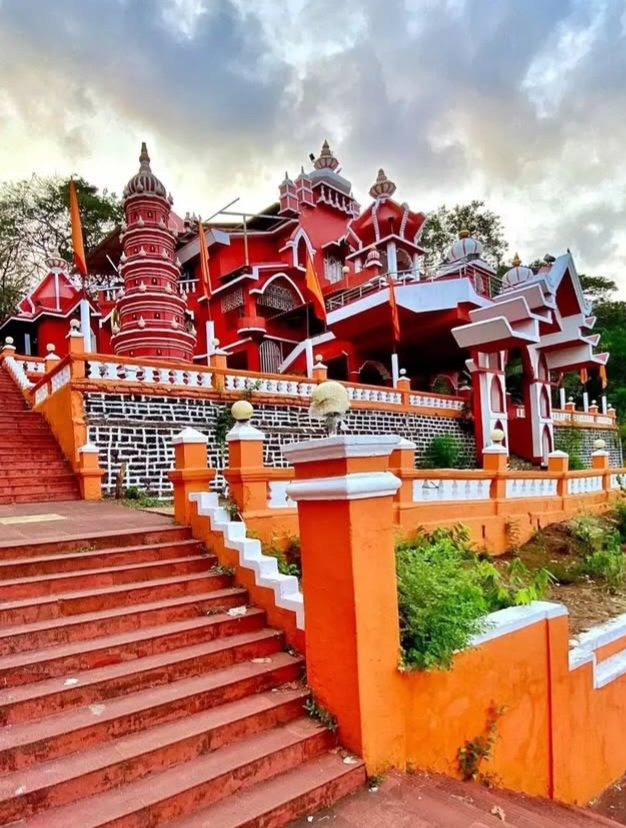
Perched gracefully on the Altinho Hill overlooking the Fontainhas Latin Quarter of Panjim, the Maruti Temple is not just a shrine — it’s a living symbol of Goa’s harmony between culture, spirituality, and scenic beauty. Every traveler who visits Goa for its beaches, casinos, or Portuguese architecture often finds a refreshing change in the calm yet colorful atmosphere of this temple. Dedicated to Lord Hanuman, the embodiment of strength, loyalty, and devotion, the Maruti Temple glows like a fiery orange jewel above the capital city, especially at night when it’s beautifully illuminated, visible from far across the Mandovi River.
Unlike the busy coastal temples of South Goa or the grand sanctuaries in Ponda, the Maruti Temple of Panjim offers a different experience — a blend of divinity, peace, and panoramic views that connect tradition with the charm of the Goan capital. It’s a place where history whispers through the stone steps, lamps flicker against the sea breeze, and devotees climb with folded hands and hopeful hearts.
A Brief History of the Maruti Temple
The roots of the Maruti Temple in Altinho trace back to Goa’s complex history of faith under Portuguese rule. For many decades, Hindu temples were restricted or destroyed during colonial conversion drives. The local Goan Hindu community preserved their faith quietly through home rituals and hidden idols. As religious tolerance grew in later years, the people of Panjim decided to build a temple for their beloved deity, Hanuman, also called Maruti in the local Konkani and Marathi languages.
The temple we see today was built in the early 20th century, symbolizing the revival of Hindu cultural identity in Panjim. Its construction reflected both devotion and resilience — an effort by the Goan Hindu community to restore public worship. The temple became an emotional anchor for the Hindus living in and around Panjim, especially those in the Fontainhas area who had long yearned for a place of open devotion.
Over the years, the Maruti Temple has undergone minor restorations, but the essence remains unchanged. The orange façade, the rhythmic ringing of bells, and the chanting of “Jai Hanuman” echo through the Altinho Hill, reminding visitors of the deep roots of spirituality that run beneath Goa’s modern, cosmopolitan surface.
Architectural Beauty of Maruti Temple
The architecture of the Maruti Temple stands out as one of the most visually striking in North Goa. Its radiant saffron-orange structure dominates the skyline of Panjim. The temple is designed in traditional Goan Hindu style with a gopuram-like dome, intricately carved wooden pillars, and tiled roofs that blend harmoniously with Goan aesthetics. The entrance features steep steps that climb up the hillside, and as one ascends, the panoramic view of the Fontainhas heritage quarter and the Mandovi River unfolds beautifully.
Inside, the sanctum houses a majestic idol of Lord Hanuman — depicted in his traditional form carrying a mace and showing his eternal devotion to Lord Rama. The interiors are simple but sacred, with marigold garlands, oil lamps, and the fragrance of incense that fills the air. The temple walls are often adorned with mythological paintings depicting episodes from the Ramayana, adding to its cultural richness.
One of the most mesmerizing sights is the temple at nighttime. The entire structure glows in golden-orange illumination, visible even from the opposite side of the Mandovi River. This glowing landmark has become an iconic view of Panjim’s skyline and often features in travel photographs and postcards of the city.
Religious and Spiritual Significance
For devotees, the Maruti Temple isn’t just a place of worship — it’s a symbol of faith, protection, and perseverance. Lord Hanuman, the deity enshrined here, is revered as a protector against evil forces and bringer of courage and wisdom. Every Tuesday and Saturday, the temple witnesses long queues of devotees offering coconuts, garlands, and lamps while chanting the Hanuman Chalisa.
The temple plays a vital role in the lives of Goan Hindus, particularly those in the Panjim region. It acts as a spiritual center for daily prayers, community rituals, and cultural celebrations. During the Hanuman Jayanti festival, the temple becomes a vibrant hub of devotion. The entire hill is decorated with flowers, colorful flags, and lights, and the air resonates with chants, bhajans, and the beating of traditional drums.
This deep-rooted faith transcends generations. Many locals share emotional stories of how praying at Maruti Temple during tough times brought them relief or success. The temple’s priests often emphasize the Hanuman ideals of humility, service, and faithfulness — values that continue to guide Goan Hindu families to this day.
Location and How to Reach Maruti Temple
The Maruti Temple is located in the Altinho Hill area of Panjim (Panaji), Goa’s capital city. The exact location is easily accessible from the city center and lies close to the Fontainhas Latin Quarter, one of the most picturesque areas in Panjim.
To reach the temple, travelers can take the narrow winding lanes from the Fontainhas side. A short climb up the stone steps leads directly to the temple entrance. Alternatively, vehicles can reach near the top of Altinho via the main road and park close to the temple gate. The climb is rewarding — every step offers sweeping views of the colorful Portuguese houses below, and once you reach the top, the panoramic view of Panjim city and the Mandovi River is breathtaking.
- Distance from Panjim Bus Stand: Approx. 1 km
- Distance from Miramar Beach: Around 4 km
- Distance from Dabolim Airport: About 30 km
- Nearest landmark: Fontainhas Latin Quarter
Local rickshaws, taxis, and two-wheelers are available easily, making it convenient for both locals and tourists. Many visitors prefer to walk from Fontainhas as the route itself is scenic and filled with charming colonial houses.
Best Time to Visit Maruti Temple
While the temple remains open throughout the year, the best time to visit Maruti Temple is during the early morning or evening hours when the weather is pleasant and the surroundings are peaceful. Morning prayers start around 7 AM, accompanied by the soft ringing of bells and the smell of sandalwood incense, creating a deeply spiritual atmosphere. The evenings, however, are magical for another reason — the temple’s orange structure lights up beautifully, offering one of the most iconic night views in Goa.
For those looking to experience the temple’s vibrant cultural energy, the Hanuman Jayanti festival (usually in April) and the annual Navratri celebrations are the best times. The temple and its surroundings come alive with devotional songs, lights, and rituals, offering visitors a glimpse into Goa’s living traditions.
Cultural Harmony around the Temple
One of the most fascinating aspects of the Maruti Temple is its location amidst the Fontainhas Latin Quarter, known for its Portuguese-style houses, narrow lanes, and Catholic chapels. This coexistence of Hindu and Christian heritage symbolizes Goa’s unique multicultural identity. Within a few minutes’ walk from the temple, visitors can find the Our Lady of the Immaculate Conception Church and several old Portuguese villas painted in pastel shades.
This harmony is what defines Panjim — a city where temples and churches share the same skyline, and festivals of both faiths are celebrated with mutual respect. The Maruti Temple, therefore, isn’t just a Hindu monument; it stands as a beacon of Goa’s inclusive spirit.
Festival Celebrations at Maruti Temple
The temple is especially famous for its Hanuman Jayanti celebration, which attracts thousands of devotees from across Goa. The festival marks the birth of Lord Hanuman and is celebrated with grand enthusiasm. The temple is adorned with flowers and lights, priests perform special pujas, and devotional music fills the air. The highlight is the palakhi (palanquin) procession, where the idol of Lord Hanuman is carried around the temple complex accompanied by traditional Goan musicians.
During Diwali, the temple glows even brighter, with oil lamps decorating the steps and courtyard. Navratri and Dussehra are also celebrated with bhajans, rituals, and community feasts. Local volunteers and devotees participate actively, showcasing the community’s unity and devotion.
Tourist Experience and What to Expect
For travelers, the Maruti Temple offers more than a religious experience — it’s a window into Goan spirituality and a refreshing break from the beaches and nightlife. Many tourists visit in the evening to witness the panoramic sunset view and the glowing orange lights of the temple against the dusky sky.
Photography enthusiasts love capturing the temple’s glowing façade and the colorful cityscape of Panjim from the hilltop. The temple’s surroundings are clean and well-maintained, and local vendors sometimes sell flowers and incense sticks for offerings. There’s a calm sense of discipline among devotees, and even during festivals, the crowd is well-managed.
A quiet visit during the morning hours allows one to experience the spiritual side of Goa often missed by beach-goers. The gentle sound of bells and chants amid the rustling trees of Altinho creates a serene and meditative environment.
Nearby Attractions around Maruti Temple
The Maruti Temple’s strategic location near Fontainhas makes it easy to explore nearby attractions:
- Fontainhas Latin Quarter: A UNESCO-recognized heritage zone, famous for colorful Portuguese-style homes, art galleries, and traditional Goan bakeries.
- Our Lady of the Immaculate Conception Church: A whitewashed church from the 16th century, one of Panjim’s most photographed landmarks.
- Mandovi River Promenade: Ideal for evening walks, sunset views, and river cruises.
- Kala Academy: Goa’s cultural hub hosting art exhibitions, concerts, and theatre shows.
- Miramar Beach: A calm beach perfect for relaxation, located just a few minutes’ drive away.
- Panjim Market: A great place to shop for Goan spices, cashews, and handicrafts.
By visiting these attractions along with the Maruti Temple, tourists can experience the perfect blend of spirituality, art, and Goan lifestyle.
Maruti Temple at Night – A View to Remember
The nighttime view of the Maruti Temple is something truly unforgettable. As the sun sets, the temple lights up in radiant orange, visible from several parts of Panjim. Whether you’re standing across the Mandovi River or strolling through the Fontainhas lanes, the sight of the illuminated temple perched on the hilltop feels almost divine.
Many photographers and travel bloggers call it “The glowing heart of Panjim.” It adds a magical charm to Goa’s capital, especially when seen against the backdrop of twinkling city lights and the calm Mandovi River.
Local Beliefs and Stories
Locals believe that Lord Hanuman protects the city from harm and brings prosperity to its people. Some old stories suggest that during Portuguese times, residents secretly worshipped Hanuman idols before the temple was officially built. When the temple was completed, it was said that the entire neighborhood of Altinho began to prosper — symbolizing divine blessings.
Even today, before starting any new venture or journey, many locals visit the Maruti Temple to seek blessings. It’s common to see young students, newly married couples, or small business owners offering prayers for success.
Photography and Travel Tips
- Timing: Visit early morning or around sunset for the best views and photography.
- Dress Code: Modest attire is appreciated as it’s an active place of worship.
- Photography: Allowed outside and from the hilltop, but avoid using flash inside the sanctum.
- Footwear: Remove shoes before entering.
- Nearby Cafes: After your visit, try local Goan snacks or coffee in Fontainhas cafés like Viva Panjim or Joseph Bar.
Why Every Traveler Should Visit Maruti Temple
Goa may be known for its beaches and parties, but places like Maruti Temple reveal the spiritual and cultural depth of the region. It shows another side of Goa — where devotion meets design, and heritage coexists with modern life. For anyone exploring Panjim, a visit to the Maruti Temple provides a sense of balance — a moment to pause, reflect, and appreciate the harmony that defines this unique land.
Whether you are a devotee seeking blessings, a traveler searching for authenticity, or a photographer chasing the perfect sunset frame, the Maruti Temple welcomes everyone with the same warmth and divine energy.
The Maruti Temple in Panjim, Goa, is more than a sacred site; it’s a spiritual landmark that connects the past and present, faith and culture, devotion and design. Standing proudly on Altinho Hill, it watches over the capital city like a guardian deity, offering blessings to all who look up in admiration. Its glow in the night sky reflects the undying flame of Goan spirituality — humble yet radiant, traditional yet timeless.
In a city where churches, markets, and colonial buildings narrate stories of diversity, the Maruti Temple stands as a reminder that Goa’s true charm lies in its harmony — the coexistence of cultures, faiths, and people who celebrate life in every form. Visiting this temple is not just a religious act; it’s a journey into Goa’s spiritual heartbeat, one that stays with you long after you leave its glowing steps behind.