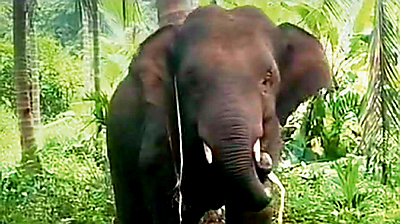
In the verdant landscapes of Goa’s Pernem taluka, a 10-year-old elephant named Omkara has become both a symbol of nature’s unpredictability and a catalyst for inter-state cooperation. His journey from the forests of Maharashtra to the fields of Goa has stirred emotions, sparked debates, and highlighted the delicate balance between human habitation and wildlife conservation.
The Journey Begins
Omkara was once a member of a herd in Maharashtra’s Sindhudurg district. However, earlier this year, he became separated from his group. This separation led him on an unexpected journey, crossing state borders and venturing into unfamiliar territories. By September, Omkara had traversed into Goa, entering through the Netarde-Mopa region. His arrival was met with a mix of awe and concern from the local communities.
A Temporary Home in Tamboxem
Upon entering Goa, Omkara found solace in the lush paddy fields of Tamboxem village. The fertile lands provided ample food, and the proximity to water sources made it an ideal temporary refuge. Villagers observed the young tusker grazing peacefully, but this tranquility was short-lived. Omkara’s presence began to disrupt the daily lives of the locals. Paddy fields were trampled, banana plantations raided, and the once serene environment became a source of anxiety.
Local farmers, dependent on their crops for livelihood, expressed their concerns. The damage to their fields was significant, and the uncertainty of Omkara’s next move added to their distress. “The biggest worry is the loss to the paddy cultivation and other crops,” shared Madhusudhan Samant, a local farmer. “We can’t even enter our fields; one never knows where Omkar is sitting.”
The Search for Solutions
Recognizing the challenges posed by Omkara’s presence, the Goa Forest Department initiated efforts to guide him back to his natural habitat. However, these attempts were met with limited success. The dense forest cover made aerial surveillance ineffective, and ground operations faced obstacles from local farmers in Maharashtra who, in an effort to protect their crops, used firecrackers to drive Omkara back into Goa. This back-and-forth movement between states highlighted the complexity of the situation.
In response, Goa reached out to neighboring Karnataka for assistance. Karnataka, known for its expertise in managing wild elephants, agreed to help. However, due to the ongoing Dussehra festival, the deployment of trained kumki elephants was delayed. Despite this, Karnataka pledged to provide technical support and guidance to Goa’s forest officials.
A Cross-Border Endeavor
The situation escalated when Omkara crossed the Tiracol River, re-entering Maharashtra. This movement prompted a coordinated effort between the forest departments of Goa, Maharashtra, and Karnataka. The objective was clear: safely guide Omkara back to his herd and ensure the safety of the local communities.
The operation, dubbed the “jumbo mission,” involved over 60 forest officials, veterinarians, and wildlife experts. Trained kumki elephants were brought in to assist in the process. These elephants are specially trained to manage wild elephants and were instrumental in calming Omkara and guiding him towards familiar territories.
Challenges and Concerns
While the collaborative efforts were commendable, they were not without challenges. Environmentalists raised concerns about the methods employed to relocate Omkara. The stress of the journey, the potential for injury, and the disruption of his natural behavior were points of contention. Some experts advocated for a more holistic approach, emphasizing the need to understand Omkara’s behavior and preferences before taking any action.
Moreover, the situation underscored the broader issue of human-wildlife conflict. As human settlements expand and agricultural activities intensify, wildlife corridors are increasingly encroached upon. Elephants, in particular, are known to wander into human habitats in search of food and water, leading to conflicts.
A Glimmer of Hope
As efforts continued, there was a sense of optimism. Omkara, though young and seemingly lost, was resilient. His journey had brought together three states, united by a common goal: the well-being of a wild elephant and the safety of their citizens. The situation highlighted the importance of inter-state collaboration in wildlife conservation and the need for comprehensive strategies to address human-wildlife conflicts.
In the end, Omkara’s tale is not just about a wandering elephant; it’s about the delicate balance between nature and human development. It’s a reminder that wildlife conservation is not just about protecting animals but also about ensuring harmonious coexistence between all living beings.
Omkara’s journey from the forests of Maharashtra to the fields of Goa is a testament to the challenges and complexities of wildlife conservation in today’s world. It underscores the importance of collaboration, understanding, and proactive measures in addressing the issues of human-wildlife conflict. As we move forward, let Omkara’s story inspire us to find solutions that protect both our natural heritage and the communities that share this planet with us.